They removed everything, so why do you still hurt?
Uterus and ovaries gone but the pain persists: there are precise causes, and none of them is your fault.
3 min read

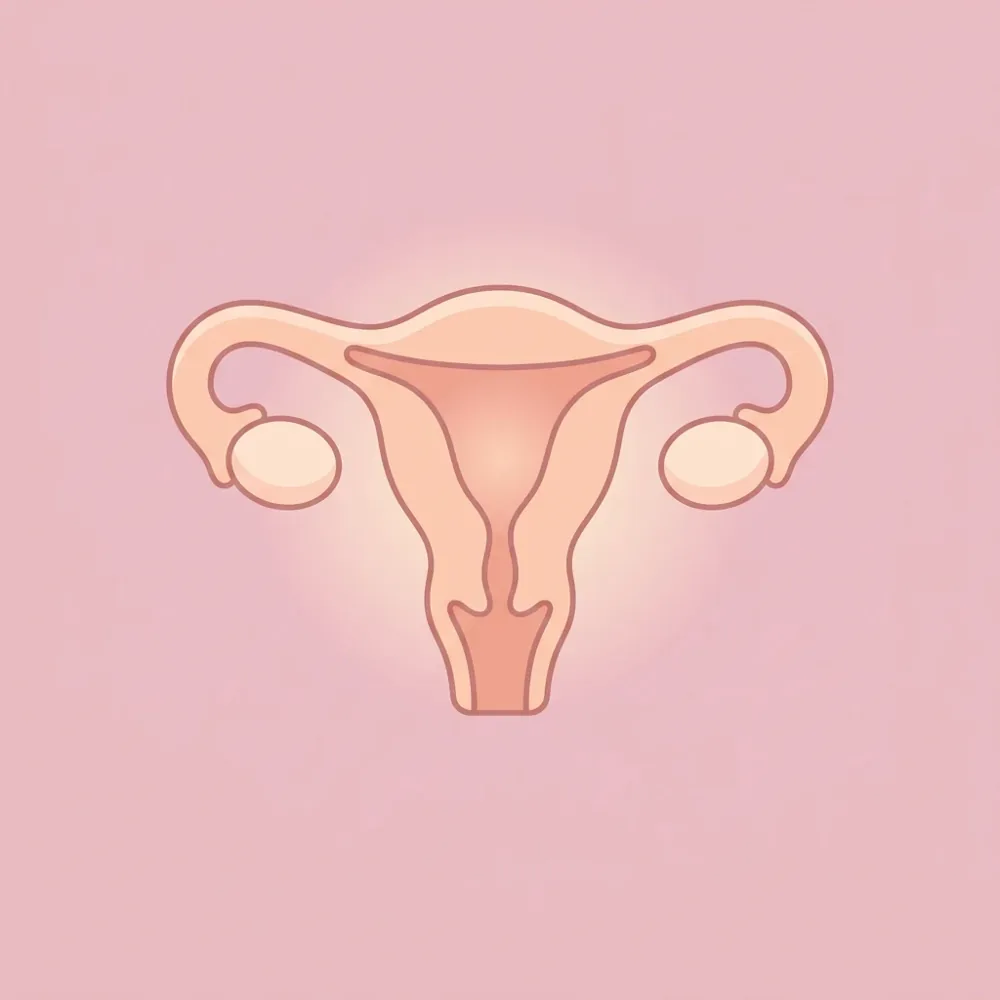
They framed this operation as the end of the problem. You agreed to give up organs, sometimes the chance of a child. And the pain came back, or never fully left. Those feelings are common, and they don't reflect any failure on your part. Your pain is real and has identifiable physical causes. You were simply given an incomplete explanation.
Why pain can persist after the ovaries are removed
Your pain has causes, and the first one is simple: endometriosis isn't a disease of the uterus. It's a chronic, inflammatory, oestrogen-dependent disease whose lesions grow elsewhere: the peritoneum, bowel, bladder, ligaments [1].
Removing the uterus and ovaries takes out the two biggest players. But it doesn't necessarily remove lesions already settled elsewhere [2]. This is documented, not theoretical.
A notable share of women keep persistent or recurrent pain after a hysterectomy (removal of the uterus) with removal of both ovaries [2]. You're not the strange exception.
Removing your ovaries did lower your risk. Keeping them carries roughly a 6-fold higher risk of recurrent pain [3]. Surgery moved the odds in your favour, but couldn't promise zero. If no one warned you of this risk, it doesn't mean you listened poorly or chose badly.
Sources (3)
- [1] Zondervan KT, Becker CM, Missmer SA. Endometriosis. N Engl J Med. 2020;382(13):1244-1256. doi:10.1056/NEJMra1810764
- [2] Becker CM, Bokor A, Heikinheimo O, et al. ESHRE guideline: endometriosis. Hum Reprod Open. 2022;2022(2):hoac009. doi:10.1093/hropen/hoac009
- [3] Shakiba K, Bena JF, McGill KM, et al. Surgical treatment of endometriosis: a 7-year follow-up on the requirement for further surgery. Obstet Gynecol. 2008;111(6):1285-1292. doi:10.1097/AOG.0b013e3181758ec6
What can still physically hurt: leftover lesions and adhesions
Two causes are physical and visible to a surgeon.
First, residual lesions. When they're numerous, deep, or stuck to the bowel or nerves, a surgeon sometimes leaves some behind to avoid worse damage. These lesions can stay active and painful [5].
Second, adhesions: internal scar tissue that glues together organs never meant to touch. With every movement, every intimate moment, every trip to the toilet, they pull, and that pull genuinely hurts [5]. Up to 60 to 80% of women operated on in the pelvis develop adhesions [4].
What makes them recognisable: a reproducible pain, same spot, same movements. And a "normal" scan rules nothing out: adhesions and tiny lesions don't always show on an ultrasound.
So note where and when you hurt. That's clinical data a specialist centre looks for on purpose.
Sources (2)
- [5] Vercellini P, Buggio L, Frattaruolo MP, et al. Surgical treatment of endometriosis: location and patterns of disease at reoperation. Fertil Steril. 2018;109(3):430-438.
- [4] Hammoud A, Gago LA, Diamond MP. Adhesions in patients with chronic pelvic pain: a role for adhesiolysis? Fertil Steril. 2004;82(6):1483-1491
Two hidden engines: oestrogen from elsewhere and over-fired nerves
Here's the part almost no one explains.
Oestrogen made elsewhere. Your ovaries were the main oestrogen factory, not the only one. Through an enzyme, aromatase, your fat tissue turns other hormones into oestrogen. And the lesions themselves over-express aromatase: they make their own fuel, on site, without ovaries [6]. That's why endometriosis can stay active and symptomatic after menopause [8].
One nuance, without blame: because fat tissue is a source of aromatase, it influences this production. This doesn't mean your weight caused your disease. It's biology, not fault.
Nerves stuck on alarm. When pain lasts years, the nervous system learns to amplify it: this is central sensitization, the alarm system stays stuck on ON [9]. Surgery can also injure a nerve and create neuropathic pain (pain coming from the nerve itself): burning, shocks, tingling [10]. Removing more organs wouldn't fix it, because the problem is in the signal, not an organ [9].
Sources (4)
- [6] Bulun SE, Yilmaz BD, Sison C, et al. Endometriosis. Endocr Rev. 2019;40(4):1048-1079. doi:10.1210/er.2018-00242
- [8] Polyzos NP, Fatemi HM, Zavos A, et al. Aromatase inhibitors in post-menopausal endometriosis. Reprod Biol Endocrinol. 2011;9:90. doi:10.1186/1477-7827-9-90
- [9] As-Sanie S, Kim J, Schmidt-Wilcke T, et al. Functional connectivity is associated with altered brain chemistry in women with endometriosis-associated chronic pelvic pain. Pain. 2016;157(5):1067-1077.
- [10] Coxon L, Horne AW, Vincent K. Pathophysiology of endometriosis-associated pain: a review of pelvic and central nervous system mechanisms. Best Pract Res Clin Obstet Gynaecol. 2018;51:53-67. doi:10.1016/j.bpobgyn.2018.01.014
What you can do, and why reconsulting is your right
Each cause has a named option, to discuss with a specialist. None is self-prescribed.
- Specialist review: persistent pain can come from leftover lesions or adhesions. An expert centre can look for them, sometimes by laparoscopy (keyhole surgery under anaesthesia) [2][5].
- Aromatase inhibitors, such as letrozole: they block the backup factory in fat and lesions, and target endometriosis precisely after surgery or menopause [7][8]. Specialist-prescribed and monitored.
- Nerve-targeted medicines: amitriptyline, gabapentin, pregabalin, via a pain clinic; effect varies by molecule [10].
- Pelvic floor physiotherapy for the muscle component.
If early surgical menopause weighs on you (hot flashes, fatigue, bones), menopause hormone therapy (MHT) can be discussed. Oestrogen can reactivate lesions, so combined regimens are preferred [8][11].
Reconsulting after surgery that "should have fixed everything" is not a complaint. Pain that persists is a medical reason, full stop.
Sources (6)
- [2] Becker CM, Bokor A, Heikinheimo O, et al. ESHRE guideline: endometriosis. Hum Reprod Open. 2022;2022(2):hoac009. doi:10.1093/hropen/hoac009
- [5] Vercellini P, Buggio L, Frattaruolo MP, et al. Surgical treatment of endometriosis: location and patterns of disease at reoperation. Fertil Steril. 2018;109(3):430-438.
- [7] Ferrero S, Gillott DJ, Venturini PL, Remorgida V. Use of aromatase inhibitors to treat endometriosis-related pain symptoms: a systematic review. Reprod Biol Endocrinol. 2011;9:89. doi:10.1186/1477-7827-9-89
- [8] Polyzos NP, Fatemi HM, Zavos A, et al. Aromatase inhibitors in post-menopausal endometriosis. Reprod Biol Endocrinol. 2011;9:90. doi:10.1186/1477-7827-9-90
- [10] Coxon L, Horne AW, Vincent K. Pathophysiology of endometriosis-associated pain: a review of pelvic and central nervous system mechanisms. Best Pract Res Clin Obstet Gynaecol. 2018;51:53-67. doi:10.1016/j.bpobgyn.2018.01.014
- [11] Hickman LC, Kotlyar A, Shue S, Falcone T. Hormonal replacement therapy in women with endometriosis and risk of recurrence. Climacteric. 2019;22(3):296-303. doi:10.1080/13697137.2018.1538340
You're not at the end of the road, just at a badly signposted turn. Leftover lesions, adhesions, oestrogen made elsewhere, nerves gone independent: each cause is real, each has its levers, none makes you a lost cause. Log your pain day by day to make it visible, then ask for a review at an expert centre. Talk about letrozole, adhesions, the neuropathic angle: you now have the words. Your pain deserves to be taken seriously, including by you.
This article is for information only and does not replace the advice of a health professional. If a symptom worries you, talk to a doctor.