Endometriosis after menopause: when should you reconsult?
No, menopause doesn't always close the endo file. Here are the concrete signals and the right person to see to be heard at last.
4 min read

You know this pain. A pull low in your pelvis, a twinge in the bathroom, back again years after your periods stopped. A quiet voice fears you'll be told it's just your age. Your pain is real. Endometriosis affects around 1 in 10 women of reproductive age [11], and the delay before a diagnosis often runs past 7 years [10]. At menopause, it doesn't always switch off.
Endometriosis doesn't always stop at menopause
You may have been told menopause cures endometriosis. The logic sounds solid: endometriosis is an inflammatory disease fed by estrogen [1], and at menopause your ovaries stop making it. But often isn't always.
The disease can persist, return, or even appear for the first time after your periods end. Postmenopausal endometriosis affects around 2 to 5% of menopausal women [2].
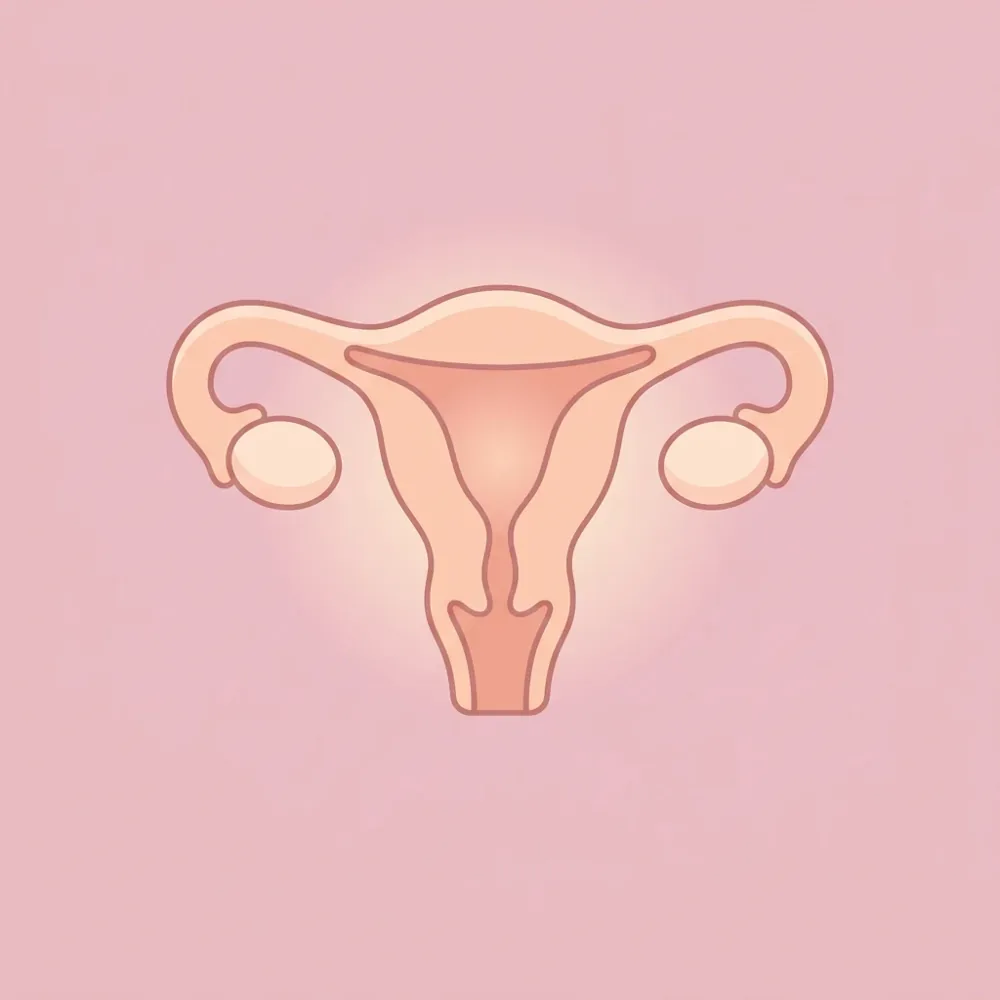
How is that possible without active ovaries? The lesions have learned to brew their own fuel. They contain an enzyme, aromatase (which turns other hormones into estrogen right on-site) [5]. A little local factory, independent of your ovaries.
There's a second source. Your fat tissue also converts certain hormones into estrogen. After menopause, this becomes one of the body's main estrogen supplies [6]. Enough to keep lesions active, even with the ovarian tap turned off.
That's why your pain is real. You're not imagining it, and you deserve to be heard at 55 just as much as at 25.
Sources (4)
- [1] Zondervan KT, Becker CM, Missmer SA. Endometriosis. N Engl J Med. 2020;382(13):1244-1256. doi:10.1056/NEJMra1810764
- [2] Secosan C, Balulescu L, Brasoveanu S, et al. Endometriosis in Menopause—Renewed Attention on a Controversial Disease. Diagnostics (Basel). 2020;10(3):134. doi:10.3390/diagnostics10030134
- [5] Inceboz U. Endometriosis after menopause. Womens Health (Lond). 2015;11(5):711-715. doi:10.2217/whe.15.59
- [6] Streuli I, Gaitzsch H, Wenger JM, Petignat P. Endometriosis after menopause: physiopathology and management of an uncommon condition. Climacteric. 2017;20(2):138-143. doi:10.1080/13697137.2017.1284781
The signals that say it's time to reconsult
You know your body. When a symptom is new, gets worse, or won't go away after a few weeks, that's a valid reason to seek care, whatever your age. Here are the signals not to let slide:
- Pain that returns or worsens. Pelvic pain (lower belly, pelvis) coming back after a lull, or growing more intense.
- Urinary symptoms that won't quit. Frequent urges, pain when you urinate, blood in your urine: deep endometriosis can affect the bladder [7].
- Persistent digestive symptoms. Painful bowel movements, stubborn bloating, changed transit: it can reach the bowel [7]. Up to 30% of deep endometriosis cases show these symptoms [9].
- Swelling or a lump that won't settle: this is checked with an exam and imaging.
- Any vaginal bleeding after menopause, once your periods have stopped for a year, must be explored, no exceptions [4].
Such bleeding can signal a reactivation, a change in the endometrium (the uterine lining), or, more rarely, a transformation of the lesions [4]. This malignant transformation stays exceptional, under 1% of cases [4].
After menopause, digestive and urinary symptoms sometimes dominate over classic pelvic pain [5]. Reconsulting on these signals isn't overreacting: it's exactly the right move.
Sources (4)
- [7] Gandhi J, Wilson AL, Liang R, et al. Deep infiltrating endometriosis and urinary/bowel involvement: a clinical review. Transl Androl Urol. 2020;9(2):881-892
- [9] Nezhat C, et al. Bowel and urinary tract involvement in deep infiltrating endometriosis. Fertil Steril. 2018
- [4] Becker CM, Bokor A, Heikinheimo O, et al. (ESHRE Endometriosis Guideline Group). ESHRE guideline: endometriosis. Hum Reprod Open. 2022;2022(2):hoac009. doi:10.1093/hropen/hoac009
- [5] Inceboz U. Endometriosis after menopause. Womens Health (Lond). 2015;11(5):711-715. doi:10.2217/whe.15.59
Menopausal hormone therapy can wake the lesions back up
You may have started menopausal hormone therapy (MHT) for hot flashes, night sweats or dryness. And you're wondering if it's linked to your pain coming back. It's a fair question.
MHT adds estrogen back in. Endometriosis feeds on estrogen, so these hormones can wake up dormant lesions [3]. The risk of reactivation on MHT is estimated at up to 4% in women with a history of endometriosis [3].
That doesn't mean MHT is off-limits for you. That's a myth: it isn't automatically contraindicated after endometriosis [3]. It calls for a personalised benefit and risk assessment, with follow-up. A combined regimen (estrogen paired with a progestogen) is preferred over estrogen alone, which is linked to more recurrences and lesion transformation [3].
If your pain returned after you started treatment, that's not a reason to stop everything on your own. It's a reason to adjust, to talk through with your doctor. Other options exist, like aromatase inhibitors, which block the local estrogen production by the lesions [6].
Sources (2)
- [3] Gemmell LC, Webster KE, Kirtley S, et al. The management of menopause in women with a history of endometriosis: a systematic review. Hum Reprod Update. 2017;23(4):481-500. doi:10.1093/humupd/dmx011
- [6] Streuli I, Gaitzsch H, Wenger JM, Petignat P. Endometriosis after menopause: physiopathology and management of an uncommon condition. Climacteric. 2017;20(2):138-143. doi:10.1080/13697137.2017.1284781
Who to see, and how to walk in prepared
Your fear is losing months with the wrong people. Here are the markers to aim straight.
- The endometriosis reference centre. For suspected deep disease, a recurrence or a complex case, this is the address to know [8][4]. You'll find a coordinated team (gynaecologist, surgeon, pain specialist) and dedicated imaging [8]. France has a network of labelled centres organised by region [10].
- The menopause-specialised gynaecologist. Ideal when your question is about MHT and adjusting it.
- Your GP or usual gynaecologist is still a valid front door: they examine you, order the first tests and refer you. Ask explicitly for a referral to an endometriosis centre.
Deep endometriosis affecting the bladder or bowel needs a joint assessment where gynaecologist, urologist and surgeon work together [7]. You don't have to piece it together alone.
One last lever: arrive with your history. A dated recap (diagnosis, surgeries, current symptoms, ongoing MHT) puts you in the expert seat, not the pleading one. Guidelines stress listening to the pain patients report [8]. The app can condense your tracking into an exportable recap to put on the table.
Sources (4)
- [8] National Institute for Health and Care Excellence (NICE). Endometriosis: diagnosis and management (NG73). 2017, mise à jour 2024
- [4] Becker CM, Bokor A, Heikinheimo O, et al. (ESHRE Endometriosis Guideline Group). ESHRE guideline: endometriosis. Hum Reprod Open. 2022;2022(2):hoac009. doi:10.1093/hropen/hoac009
- [10] Haute Autorité de Santé (HAS) / Stratégie nationale endométriose. 2022
- [7] Gandhi J, Wilson AL, Liang R, et al. Deep infiltrating endometriosis and urinary/bowel involvement: a clinical review. Transl Androl Urol. 2020;9(2):881-892
You walk away with solid bearings: the myth that endo stops at menopause is gone, you know which signals say reconsult and who to turn to. You deserve to be heard at 55 just as at 25. Note your symptoms, date them, and book the appointment that fits your situation. Let the app condense your history into one recap. This time, you walk into that office as the expert on your own body.
This article is for information only and does not replace the advice of a health professional. If a symptom worries you, talk to a doctor.