Will your endometriosis really end at menopause?
Often it eases, sometimes it lingers. The honest answer, no slogans, about what's ahead.
3 min read
Your pain is real, and you may be waiting for menopause like a finish line. You were promised it would all stop then. Here's the honest answer: for many women, falling estrogen genuinely calms endometriosis. But it isn't automatic, and it isn't complete for everyone. Understanding why helps you take back control instead of waiting for a miracle.
Why menopause often calms endometriosis
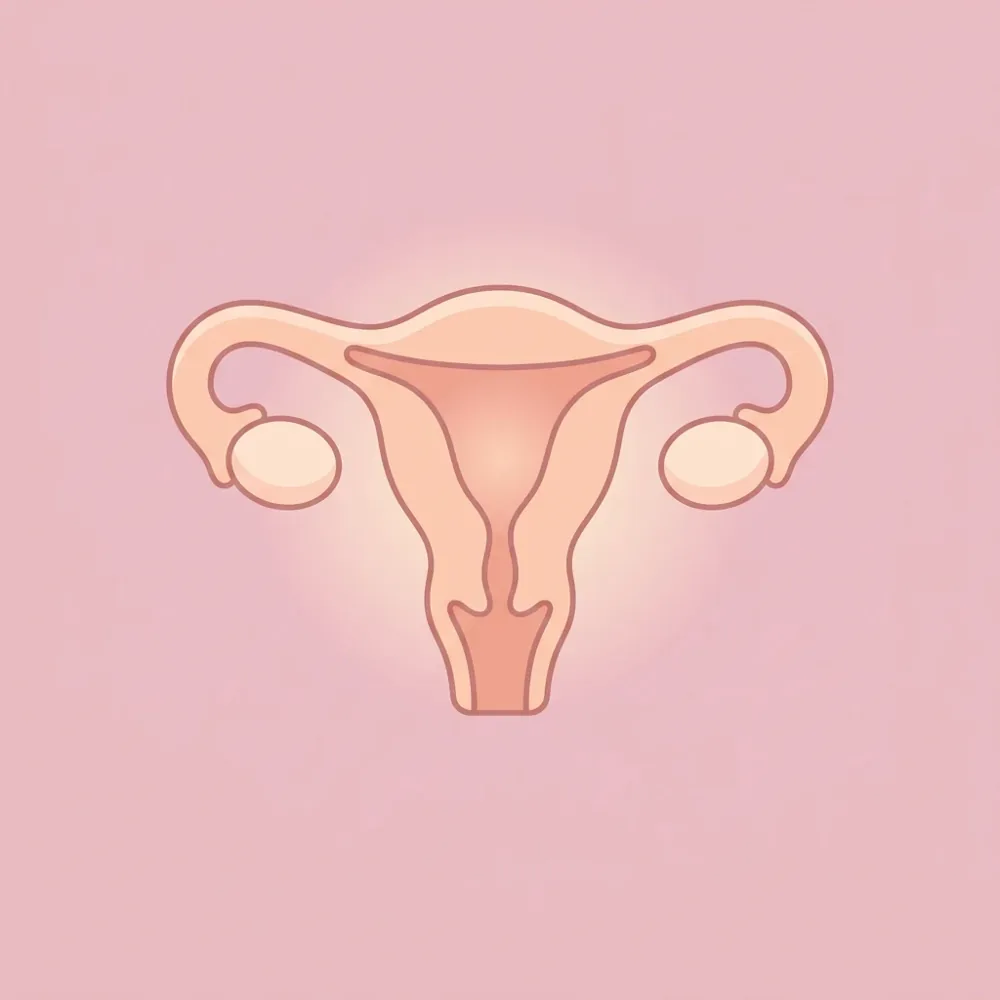
Endometriosis is tissue similar to the lining of the uterus that grows outside the uterus [1]. About one woman in ten of reproductive age lives with it, some 190 million women and girls worldwide [2]. In France, diagnosis takes seven years on average [3]. Seven years in which your pain was often brushed aside.
The disease feeds on estrogen, the hormones your ovaries make [1]. At menopause, your ovaries shut down and estrogen drops sharply. Starved of fuel, many lesions go quiet [4].
The result: inflammation eases, and most women report real pain relief after natural menopause [4]. So the promise rests on solid biology. Your pain always had a physical cause, and the doubt you were made to carry had no place there.
Sources (4)
- [1] Zondervan KT, Becker CM, Missmer SA. Endometriosis. N Engl J Med. 2020;382(13):1244-1256. doi:10.1056/NEJMra1810764
- [2] Organisation Mondiale de la Santé. Endométriose. Principaux repères. 2023.
- [3] Haute Autorité de Santé / Ministère de la Santé. Stratégie nationale de lutte contre l'endométriose. 2022.
- [4] Streuli I, Gaitzsch H, Wenger JM, Petignat P. Endometriosis after menopause: physiopathology and management of an uncommon condition. Climacteric. 2017;20(2):138-143. doi:10.1080/13697137.2017.1284781
Why it sometimes lingers: three causes, never your fault
Cutting the hormonal fuel isn't always enough. Three mechanisms can keep pain going, and none of them is your fault.
- Self-fueling lesions. Some lesions make their own estrogen through an enzyme, aromatase, even after the ovaries fall silent [4][10]. That's why 2 to 5% of affected women stay symptomatic after menopause [4].
- Adhesions and deep lesions. Years of disease leave scar tissue that glues organs together [1]. These scars don't melt when estrogen falls: they can pull and compress.
- Nerve pain. After years of pain signals, the nervous system can stay oversensitive [6]. The alarm keeps ringing even when the lesions have gone quiet.
If pain lingers after menopause, it isn't imagination and it isn't a dead end. It's one of these mechanisms, and each has its own solutions.
Sources (4)
- [4] Streuli I, Gaitzsch H, Wenger JM, Petignat P. Endometriosis after menopause: physiopathology and management of an uncommon condition. Climacteric. 2017;20(2):138-143. doi:10.1080/13697137.2017.1284781
- [10] Bulun SE, Yilmaz BD, Sison C, et al. Endometriosis. Endocr Rev. 2019;40(4):1048-1079. doi:10.1210/er.2018-00242
- [1] Zondervan KT, Becker CM, Missmer SA. Endometriosis. N Engl J Med. 2020;382(13):1244-1256. doi:10.1056/NEJMra1810764
- [6] As-Sanie S, Black R, Giudice LC, et al. Assessing research gaps and unmet needs in endometriosis. Am J Obstet Gynecol. 2019;221(2):86-94. doi:10.1016/j.ajog.2019.02.033
HRT after endometriosis: possible, worth discussing
Hot flashes, night sweats, broken sleep, brain fog: menopause brings its own troubles. To ease them, doctors often suggest menopausal hormone therapy (HRT). A fair question follows: could that estrogen wake the endo back up?
The answer is nuanced. Yes, estrogen-only HRT can reactivate dormant lesions, with recurrence reported in up to 4% of treated women [8][7]. That's not most women, but you deserve to know it.
That's why, with a history of endometriosis, a combined therapy (estrogen plus progestogen) or tibolone is preferred over estrogen alone [7][5]. The progestogen curbs the reactivation of lesions and lowers a rare risk of malignant change [5][11].
So HRT is neither off-limits nor a leap in the dark. It's a choice to individualize with your doctor. Saying "I have a history of endometriosis" is not a footnote: it's information your prescriber needs.
Sources (4)
- [8] Secosan C, Balulescu L, Brasoveanu S, et al. Endometriosis in Menopause: Renewed Attention on a Controversial Disease. Diagnostics (Basel). 2020;10(3):134. doi:10.3390/diagnostics10030134
- [7] Gemmell LC, Webster KE, Kirtley S, et al. The management of menopause in women with a history of endometriosis: a systematic review. Hum Reprod Update. 2017;23(4):481-500. doi:10.1093/humupd/dmx011
- [5] Becker CM, Bokor A, Heikinheimo O, et al. (ESHRE Endometriosis Guideline Group). ESHRE guideline: endometriosis. Hum Reprod Open. 2022;2022(2):hoac009. doi:10.1093/hropen/hoac009
- [11] Kobayashi H, et al. Malignant transformation of endometriosis. Int J Gynecol Cancer. 2020;30(1):1-8.
Track your pain to learn YOUR answer
No statistic can predict your case. "Most women improve" is a trend, not a promise for your body. The only way to know is to watch what happens in you, month by month.
Perimenopause unfolds over years, with ups and downs. Memory plays tricks on you when you're in pain. By logging the intensity, type and timing of your pain, you see a real trend, not a hunch. Pain that persists with no bleeding points to adhesions or a nerve component [6].
Knowing the type of pain changes everything, because each has its own solutions [6][5]. Surgery remains an option for deep lesions and adhesions [5][9]. Aromatase inhibitors can block estrogen made locally by the lesions [4]. Nerve pain responds to other approaches, like pelvic physiotherapy [6].
This record becomes your best ally at appointments. It's harder to wave off a clear graph than a feeling. "No more periods" never meant "nothing left to do."
Sources (4)
- [6] As-Sanie S, Black R, Giudice LC, et al. Assessing research gaps and unmet needs in endometriosis. Am J Obstet Gynecol. 2019;221(2):86-94. doi:10.1016/j.ajog.2019.02.033
- [5] Becker CM, Bokor A, Heikinheimo O, et al. (ESHRE Endometriosis Guideline Group). ESHRE guideline: endometriosis. Hum Reprod Open. 2022;2022(2):hoac009. doi:10.1093/hropen/hoac009
- [9] Inceboz U. Endometriosis after menopause. Womens Health (Lond). 2015;11(5):711-715. doi:10.2217/whe.15.59
- [4] Streuli I, Gaitzsch H, Wenger JM, Petignat P. Endometriosis after menopause: physiopathology and management of an uncommon condition. Climacteric. 2017;20(2):138-143. doi:10.1080/13697137.2017.1284781
So, will endometriosis end at menopause? For many women it eases clearly, and you have every right to hope for that. For others, the hormonal fire dies down but the scars and the nerves keep speaking up. Your answer depends on the mix your body carries, and that mix is yours alone. You're no longer waiting blindfolded. Start tracking your pain this cycle, type by type, and bring that data to your doctor. That's taking back control.
This article is for information only and does not replace the advice of a health professional. If a symptom worries you, talk to a doctor.