Your adhesions still hurt after menopause: here's why
Menopause can calm your endometriosis lesions, but it doesn't untie the scars already formed inside you. And that changes everything.
3 min read
Your pain is real, and it has a specific physical cause. If your lower belly still pulls months after your periods stopped, you are not imagining it and you are not exaggerating. Menopause calms the lesions that feed on hormones, but it doesn't undo the scars already formed inside you. Here's why they still pull, and what you can actually do.
Lesions and adhesions: two different things
Maybe no one explained this: your endometriosis and your adhesions are two different things.
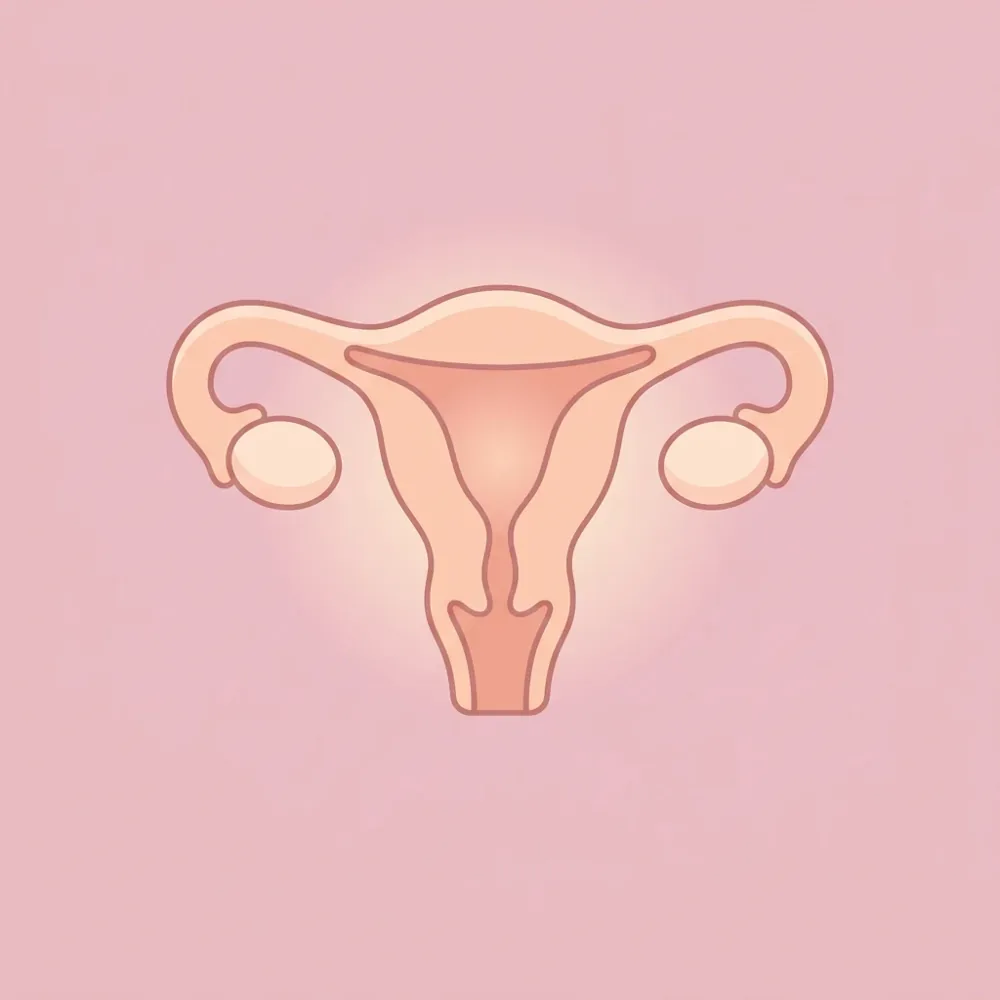
Endometriosis is an inflammatory disease that feeds on estrogen [1]. While you have cycles, these hormones fuel the lesions. At menopause the fuel is cut off, and the lesions go quiet. That's the relief you were promised.
But years of inflammation leave scars. Those scars are your adhesions: bands of fibrous tissue (collagen, like a scar on your skin) that glue your organs together [4].
A scar doesn't respond to hormones and doesn't fade on its own [4]. The lesions can dry out while the adhesions stay exactly where they are. Around 2 to 5% of postmenopausal women keep symptoms linked to endometriosis [3]. You are not an anomaly.
Sources (3)
- [1] Zondervan KT, Becker CM, Missmer SA. Endometriosis. N Engl J Med. 2020;382(13):1244-1256. doi:10.1056/NEJMra1810764
- [4] Ten Broek RPG, Stommel MWJ, Strik C, et al. Benefits and harms of adhesion barriers for abdominal surgery: a systematic review and meta-analysis. Lancet. 2014;383(9911):48-59. doi:10.1016/S0140-6736(13)61687-6
- [3] Gemmell LC, Webster KE, Kirtley S, et al. The management of menopause in women with a history of endometriosis: a systematic review. Hum Reprod Update. 2017;23(4):481-500. doi:10.1093/humupd/dmx011
This pain is mechanical, not hormonal
Adhesion pain is mechanical. Your organs are glued together, so every movement pulls on these bands. You bend, you digest, you're intimate: it pulls [2].
This tug no longer depends on your hormones, since there is no cycle and no estrogen left. The fibrous part of endometriosis responds poorly to hormonal treatment anyway, even in younger women [2]. So menopause has no grip on the scar.
A second mechanism comes in. After years of pain signals, the nervous system can turn hypersensitive: this is central sensitization (the pain circuit ramping up and amplifying the signal) [5]. It sometimes continues even when the original cause settles.
These mechanisms are physical and measurable. Your pain is not "in your head," and it is nobody's fault.
Sources (2)
- [2] Vercellini P, Viganò P, Somigliana E, Fedele L. Endometriosis: pathogenesis and treatment. Nat Rev Endocrinol. 2014;10(5):261-275. doi:10.1038/nrendo.2013.255
- [5] Stratton P, Berkley KJ. Chronic pelvic pain and endometriosis: translational evidence of the relationship and implications. Hum Reprod Update. 2011;17(3):327-346. doi:10.1093/humupd/dmq050
What can really help: physiotherapy, pain management, sometimes surgery
Because the pain is mechanical and nerve-related, the useful levers are no longer hormonal. Several exist.
Pelvic floor physiotherapy (hands-on rehabilitation of the lower belly and pelvic floor) works on the glued tissue. Scar massage and myofascial stretching can improve mobility and ease mechanical pain [6]. It's often the first lever, and it's non-invasive.
For the nerve component, pain management combines several tools. TENS (small electrical pulses that modulate pain signals) helps some women. Medication is used in steps and always needs a prescription and medical follow-up. Pain clinics add cognitive therapy and stress management, an approach recommended by the European guidelines [7].
As a last resort, targeted surgery, or adhesiolysis, cuts the pain-causing adhesions by laparoscopy (surgery through small incisions, under anesthesia) [8]. But they can reform in 55 to 100% of cases [9]. Anti-adhesion barriers, gels or membranes placed during the operation, can limit this reformation [4]. So non-surgical options are often preferred first [7].
Sources (5)
- [6] Gelbaya TA, Nardo LG. Evidence-based management of endometrioma and pelvic adhesions. Reprod Biomed Online. 2011;23(1):15-24. doi:10.1016/j.rbmo.2010.10.011
- [7] ESHRE Endometriosis Guideline Group, Becker CM, Bokor A, Heikinheimo O, et al. ESHRE guideline: endometriosis. Hum Reprod Open. 2022;2022(2):hoac009. doi:10.1093/hropen/hoac009
- [8] Mowat A, Maher C, Ballard E. Surgical versus conservative management of chronic pelvic pain due to adhesions. Cochrane Database Syst Rev. 2014;(11):CD011014. doi:10.1002/14651858.CD011014.pub2
- [9] Diamond MP, Freeman ML. Clinical implications of postsurgical adhesions. Hum Reprod Update. 2001;7(6):567-576. doi:10.1093/humupd/7.6.567
- [4] Ten Broek RPG, Stommel MWJ, Strik C, et al. Benefits and harms of adhesion barriers for abdominal surgery: a systematic review and meta-analysis. Lancet. 2014;383(9911):48-59. doi:10.1016/S0140-6736(13)61687-6
Map your pain to help your team target it
Adhesions are hard to see and locate without surgery. So you hold precious information: the map of your own pain.
Adhesion pain has specific mechanical triggers: a certain movement, after meals, during sex, sitting for a long time. Noting the where and the when turns a vague complaint into usable data [5].
Concretely, well-described pain guides your team. It helps tell a mechanical pull (pointing toward physiotherapy or surgery) from neuropathic pain (pointing toward pain management) [7].
The app lets you log your pain zones, moments and intensity over time. You arrive at your appointment with data, not a blurry memory. That's how you take back control.
Sources (2)
- [5] Stratton P, Berkley KJ. Chronic pelvic pain and endometriosis: translational evidence of the relationship and implications. Hum Reprod Update. 2011;17(3):327-346. doi:10.1093/humupd/dmq050
- [7] ESHRE Endometriosis Guideline Group, Becker CM, Bokor A, Heikinheimo O, et al. ESHRE guideline: endometriosis. Hum Reprod Open. 2022;2022(2):hoac009. doi:10.1093/hropen/hoac009
Your pain is neither a mystery nor a punishment. It's the mechanical imprint of scars pulling on your organs, independently of your hormones. Menopause may have put out the inflammation without undoing the knots already formed. No one can promise you zero pain, but mechanical pain has real levers. Your next step: note your pain zones and moments, then bring that map to your doctor to point you toward a specialized physiotherapist or a pain clinic. Asking for help is your right.
This article is for information only and does not replace the advice of a health professional. If a symptom worries you, talk to a doctor.