How can you relieve painful periods?
Your cramps have a clear physical cause. Here are the proven ways to calm them, and the warning signs worth a doctor's visit.
4 min read
Your period pain is real and it has a physical cause. Between 50 and 90% of menstruating people get cramps during their periods [1]. Having cramps is common, but suffering to the point where you cannot live normally should never be dismissed. You deserve relief, and a whole range of options exists.
Your cramps come from too many prostaglandins
Every month, your uterus sheds its lining: that is your period. To do this, it releases prostaglandins (molecules that make the muscle contract) [1]. This is useful, but your body sometimes makes far too many.
People with very painful periods produce 2 to 4 times more prostaglandins than others [2]. These contractions squeeze the small blood vessels of the uterus, which then runs short of oxygen. It is the same mechanism as a calf cramp: too strong a contraction plus a lack of oxygen equals pain [2].
Your body is not faulty; it is working with a little too much vigour. Understanding this mechanism opens up concrete solutions: you can lower these molecules, relax the muscle, or block the pain signal.
Sources (2)
- [1] Proctor M, Farquhar C. Diagnosis and management of dysmenorrhoea. BMJ. 2006;332(7550):1134-1138. doi:10.1136/bmj.332.7550.1134
- [2] Harel Z. Dysmenorrhea in adolescents and young adults: an update on pharmacological treatments and management strategies. Expert Opin Pharmacother. 2012;13(15):2157-2170. doi:10.1517/14656566.2012.725045
What relieves your cramps right now
You can act right away, without a prescription. Heat is the best-proven step: continuous heat at 39 to 40 degrees Celsius on the lower abdomen relieves as much as a 400 mg ibuprofen tablet [3]. It relaxes the muscle, brings back oxygen, and calms the pain signal [4].
A few options that can be combined:
- Heat: a hot water bottle or heat patch on the lower abdomen, 20 to 30 minutes.
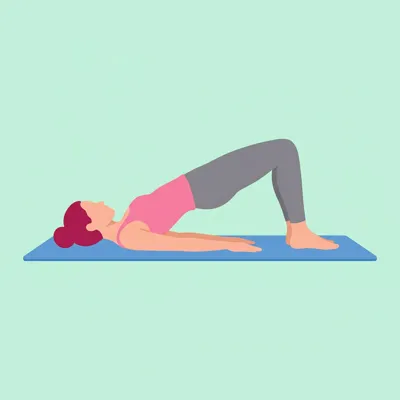
- Gentle movement: walking, child's pose, or cat-cow, which release endorphins and cut pain by 1.5 to 2 points out of 10 [4].
- Slow breathing: breathe in for 4 seconds, out for 6, ten times, to relax the nervous system [4].
Your plate matters too. Magnesium (dark chocolate, almonds, spinach) relaxes the uterine muscle [5]. The omega-3 in oily fish lowers inflammatory prostaglandins, while omega-6 raises them [6]. Moving regularly often makes periods less painful over the months [4].
Sources (4)
- [3] Akin MD, Weingand KW, Hengehold DA, Goodale MB, Hinkle RT, Smith RP. Continuous low-level topical heat in the treatment of dysmenorrhea. Obstet Gynecol. 2001;97(3):343-349. doi:10.1016/S0029-7844(00)01163-7
- [4] Armour M, Smith CA, Steel KA, Macmillan F. The effectiveness of self-care and lifestyle interventions in primary dysmenorrhea: a systematic review and meta-analysis. BMC Complement Altern Med. 2019;19(1):22. doi:10.1186/s12906-019-2433-8
- [5] Parazzini F, Di Martino M, Pellegrino P. Magnesium in the gynecological practice: a literature review. Magnesium Res. 2017;30(1):1-7. doi:10.1684/mrh.2017.0419
- [6] Rahbar N, Asgharzadeh N, Ghorbani R. Effect of omega-3 fatty acids on intensity of primary dysmenorrhea. Int J Gynecol Obstet. 2012;117(1):45-47. doi:10.1016/j.ijgo.2011.11.019
Medications and TENS: effective backup
Taking a painkiller is not a failure. Non-steroidal anti-inflammatory drugs (NSAIDs, such as ibuprofen or naproxen) are the best-studied treatment for cramps, clearly more effective than a placebo [7].
They block the enzyme that makes prostaglandins, which lowers both inflammation and contractions [2][7]. The tip that changes everything: take them at the first signs, or even 1 to 2 days before a period you know will be painful. Waiting until the pain is established makes them less effective [2]. Follow the recommended doses and ask your pharmacist or doctor, especially with a sensitive stomach.
Other backup options exist:
- Antispasmodics (such as phloroglucinol), which relax the uterine muscle.
- TENS (transcutaneous electrical nerve stimulation): a small device that sends painless pulses and blocks the pain signal, with no side effects throughout the body [8].
You can combine these approaches: heat plus NSAIDs, TENS plus movement, ongoing magnesium. It is yours to personalise, based on what relieves you.
Sources (3)
- [7] Marjoribanks J, Ayeleke RO, Farquhar C, Proctor M. Nonsteroidal anti-inflammatory drugs for dysmenorrhoea. Cochrane Database Syst Rev. 2015;(7):CD001751. doi:10.1002/14651858.CD001751.pub3
- [2] Harel Z. Dysmenorrhea in adolescents and young adults: an update on pharmacological treatments and management strategies. Expert Opin Pharmacother. 2012;13(15):2157-2170. doi:10.1517/14656566.2012.725045
- [8] Proctor ML, Smith CA, Farquhar CM, Stones RW. Transcutaneous electrical nerve stimulation and acupuncture for primary dysmenorrhoea. Cochrane Database Syst Rev. 2002;(1):CD002123. PMID 11869624. doi:10.1002/14651858.CD002123
When to see a doctor: your pain may hide something else
If your pain affects your daily life, you are not overreacting. Most cramps come from prostaglandins, but sometimes the pain signals something else.
See a doctor if:
- The pain resists NSAIDs taken correctly (right dose, right timing).
- The cramps get worse year after year.
- You have pain outside your period, or during sex.
- Your periods are very heavy (protection changed every hour, large clots).
- You have pain when urinating or having a bowel movement during your period.
These signals can point to endometriosis, adenomyosis, or fibroids. Endometriosis affects about 1 in 10 menstruating people, nearly 2 million women in France [9][10]. Tissue similar to the uterine lining grows outside the uterus and causes painful inflammation. Adenomyosis affects the uterine muscle itself [11].
The average delay to diagnosis is still 7 years [9]. This delay is neither acceptable nor your fault. You can tell your doctor: my pain stops me from living normally, painkillers are not enough, I would like to explore endometriosis. You have the right to a second opinion.
Sources (4)
- [9] Zondervan KT, Becker CM, Missmer SA. Endometriosis. N Engl J Med. 2020;382(13):1244-1256. doi:10.1056/NEJMra1810764
- [10] INSERM – Dossier Endométriose, 2022. Stratégie nationale de lutte contre l'endométriose, Ministère de la Santé, janvier 2022.
- [11] Chapron C et al. Diagnosing adenomyosis: an integrated clinical and imaging approach. Hum Reprod Update. 2020;26(3):392-411. doi:10.1093/humupd/dmz049
- [12] Janssen EB et al. Prevalence of endometriosis diagnosed by laparoscopy in adolescents with dysmenorrhea or chronic pelvic pain: a systematic review. Hum Reprod Update. 2013;19(5):570-582. doi:10.1093/humupd/dmt016
Your pain is real, explainable, and not inevitable. Start with what speaks to you: heat, gentle movement, food, NSAIDs, or TENS, without trying everything at once. Track your symptoms and what relieves you in Endora to spot what works for you. And if the pain stays too strong, it is not a failure: it is a sign that medical support can help.
This article is for information only and does not replace the advice of a health professional. If a symptom worries you, talk to a doctor.