Why do painkillers no longer relieve my endometriosis pain?
When your pain changes mechanism, it needs a different response. Here is which one.
4 min read
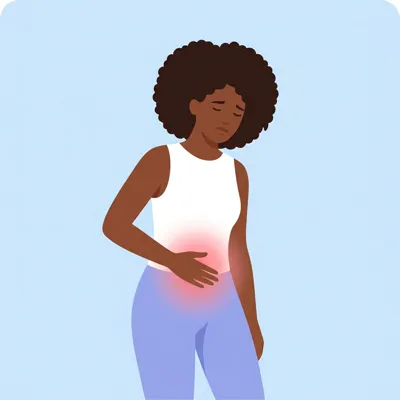
If paracetamol and anti-inflammatory drugs no longer relieve you, this is not a failure on your part. Your pain is real and it has a documented biological explanation. Most often, this block means one thing: your pain has changed its mechanism, and it needs a different kind of response.
Why painkillers stop being enough
When standard painkillers stop working, it is often a sign that your pain has changed its nature [7]. It is not exaggeration, and it is not your fault.
Endometriosis affects about 1 woman in 10 of reproductive age, meaning 1.5 to 2.5 million women in France [10][1]. Among them, 50 to 80% live with pelvic pain that goes far beyond painful periods [1].
Many women notice that their pain evolves over time. It spreads beyond the pelvis. It gets triggered by things that did not used to hurt: tight clothing, prolonged sitting, the bladder filling up.
One finding keeps coming back in research: pain does not match the number or size of the lesions [1]. Minimal lesions can hurt a great deal. That is because pain is not only produced by the lesions: it is also amplified and maintained by the nervous system [2][3]. Painkillers designed for local inflammation can no longer be enough [7].
Sources (5)
- [7] ESHRE Endometriosis Guideline Development Group. Endometriosis: Guideline of the European Society of Human Reproduction and Embryology. ESHRE Guidelines. 2022.
- [10] Inserm. Endométriose. 2023. Stratégie nationale de lutte contre l'endométriose. Ministère de la Santé. 2022.
- [1] Zondervan KT, Becker CM, Missmer SA. Endometriosis. N Engl J Med. 2020;382(13):1244-1256. doi:10.1056/NEJMra1810764
- [2] As-Sanie S, Harris RE, Napadow V, Kim J, Neshewat G, Kairys A, Williams D, Clauw DJ, Schmidt-Wilcke T. Changes in regional gray matter volume in women with chronic pelvic pain: a voxel-based morphometry study. Pain. 2012;153(5):1006-1014.
- [3] Stratton P, Khachikyan I, Sinaii N, Ortiz R, Shah J. Association of chronic pelvic pain and endometriosis with signs of sensitization and myofascial pain. Obstet Gynecol. 2015;125(3):719-728.
How the nervous system amplifies pain
Facing pain that lasts months or years, the nervous system can go off balance. Picture a fire alarm so sensitive it goes off for burnt toast [2][3].
This is central sensitization: the spinal cord and brain turn up the volume of pain. Normally painless sensations become painful (allodynia), and mild pain becomes unbearable (hyperalgesia). Up to 82 to 83% of women with endometriosis and chronic pelvic pain show signs of it [3].
This is not "in your head." Brain imaging shows measurable changes in gray matter in regions that process pain [2]. Your nervous system is not broken: it has switched to hyperprotection mode, and it can be acted upon [6][8].
Sometimes neuropathic pain adds to this, when the nerves themselves are involved: burning, electric shocks, tingling. About 40% of the women concerned show this component, measured with validated questionnaires [8]. Lesions grow their own nerve fibers, and some deep lesions press on the pelvic nerves [8]. This is why paracetamol and anti-inflammatory drugs, which target inflammation, cannot reach that target [7][8].
Finally, the pelvic organs share nerve pathways: when one gets inflamed, neighboring nerves fire too. So you can feel bladder or bowel pain with no lesion on those organs [9].
Sources (6)
- [2] As-Sanie S, Harris RE, Napadow V, Kim J, Neshewat G, Kairys A, Williams D, Clauw DJ, Schmidt-Wilcke T. Changes in regional gray matter volume in women with chronic pelvic pain: a voxel-based morphometry study. Pain. 2012;153(5):1006-1014.
- [3] Stratton P, Khachikyan I, Sinaii N, Ortiz R, Shah J. Association of chronic pelvic pain and endometriosis with signs of sensitization and myofascial pain. Obstet Gynecol. 2015;125(3):719-728.
- [6] Till SR, As-Sanie S, Schrepf A. Psychology of Chronic Pelvic Pain: Prevalence, Neurobiological Vulnerabilities, and Treatment. Clin Obstet Gynecol. 2019;62(1):22-36.
- [8] Morotti M, Vincent K, Becker CM. Mechanisms of pain in endometriosis. Eur J Obstet Gynecol Reprod Biol. 2017;209:8-13.
- [7] ESHRE Endometriosis Guideline Development Group. Endometriosis: Guideline of the European Society of Human Reproduction and Embryology. ESHRE Guidelines. 2022.
- [9] Yosef A, Allaire C, Williams C, Ahmed AG, Al-Hussaini T, Abdellah MS, Wong F, Lisonkova S, Yong PJ. Multifactorial contributors to the severity of chronic pelvic pain in women. Am J Obstet Gynecol. 2016;215(6):760.e1-760.e14.
Treatments that target the right mechanism
Because this pain takes several paths, the response works on several fronts at once [7][9]. It is not "yoga instead of medication," and it is not an admission of failure.
Neuromodulators adjust the pain circuits in the nervous system. If you are offered amitriptyline or gabapentin, it is not because anyone thinks you are depressed: these drugs act on pain transmission, not on mood [7]. This is neurology, not disguised psychiatry.
- Amitriptyline (low dose, 10 to 75 mg per day) and duloxetine strengthen the natural pain "brake."
- Gabapentin and pregabalin calm nerves that fire continuously.
- Their effect on neuropathic pain is documented (NNT of about 3.6 and 6.3) [7].
These drugs are not magic: they take several weeks to work, doses need adjusting, and side effects are possible (drowsiness, dry mouth). ESHRE 2022 lists them as an option when first-line treatment fails, even if the evidence specific to endometriosis stays limited [7].
Other levers combine together:
- hormonal treatment (such as dienogest) lowers lesion inflammation and pain scores at 12 months [7];
- pelvic floor physiotherapy releases muscle tension (contraction points are found in more than 90% of women) [3];
- TENS, a through-the-skin nerve stimulation usable at home, activates the body's natural pain brake [5];
- CBT (cognitive behavioral therapy) and mindfulness meditation reduce pain amplification [6].
Even surgery that removes the lesions does not correct sensitization that is already in place [7]. For resistant pain, pain centers offer targeted nerve blocks or sacral nerve stimulation [7].
Sources (5)
- [7] ESHRE Endometriosis Guideline Development Group. Endometriosis: Guideline of the European Society of Human Reproduction and Embryology. ESHRE Guidelines. 2022.
- [9] Yosef A, Allaire C, Williams C, Ahmed AG, Al-Hussaini T, Abdellah MS, Wong F, Lisonkova S, Yong PJ. Multifactorial contributors to the severity of chronic pelvic pain in women. Am J Obstet Gynecol. 2016;215(6):760.e1-760.e14.
- [3] Stratton P, Khachikyan I, Sinaii N, Ortiz R, Shah J. Association of chronic pelvic pain and endometriosis with signs of sensitization and myofascial pain. Obstet Gynecol. 2015;125(3):719-728.
- [5] Mira TAA, Buen MM, Borges MG, Yela DA, Benetti-Pinto CL. Systematic review and meta-analysis of complementary treatments for women with symptomatic endometriosis. Int J Gynaecol Obstet. 2018;143(1):2-9.
- [6] Till SR, As-Sanie S, Schrepf A. Psychology of Chronic Pelvic Pain: Prevalence, Neurobiological Vulnerabilities, and Treatment. Clin Obstet Gynecol. 2019;62(1):22-36.
What you can do, and say to your doctor
Understanding what is happening in your body is already a step forward. It gives you words for your conversations with health professionals.
Describing the quality of your pain matters as much as its intensity. A 0 to 10 scale is not enough [4]. Burning, shocks, and tingling point toward a neuropathic component; pain triggered by simple touch suggests sensitization.
You can ask concrete questions:
- "Could my pain have a neuropathic component?"
- "Would a neuromodulator suit my situation?"
- "Could you refer me to a pain center?"
Your care may bring together a team: gynecologist, pain specialist, pelvic floor physiotherapist, psychologist. You do not have to carry it all alone. Adapted exercise, such as walking, swimming, or gentle yoga, also shows benefits [5].
You have the right to question a treatment, ask for explanations, and refuse an approach. Your knowledge of your own body is valuable clinical data.
Sources (2)
- [4] Bourdel N, Alves J, Pickering G, Ramilo I, Roman H, Canis M. Systematic review of endometriosis pain assessment: how to choose a scale? Hum Reprod Update. 2015;21(1):136-152.
- [5] Mira TAA, Buen MM, Borges MG, Yela DA, Benetti-Pinto CL. Systematic review and meta-analysis of complementary treatments for women with symptomatic endometriosis. Int J Gynaecol Obstet. 2018;143(1):2-9.
Your pain has a name, identified mechanisms, and responses that exist. What you are living through comes from a nervous system that has learned to overreact, not from personal fragility. What has been learned can be eased and rebalanced. Not in a day, not with a single solution, but by targeting the right mechanisms, with the right people by your side. Logging the quality and triggers of your pain in Endora can help you talk about it with your doctor.
This article is for information only and does not replace the advice of a health professional. If a symptom worries you, talk to a doctor.