Why are my periods so painful?
Cramps that keep you in bed are not something you just have to accept. Here's how to tell ordinary pain apart from the signs of endometriosis.
4 min read
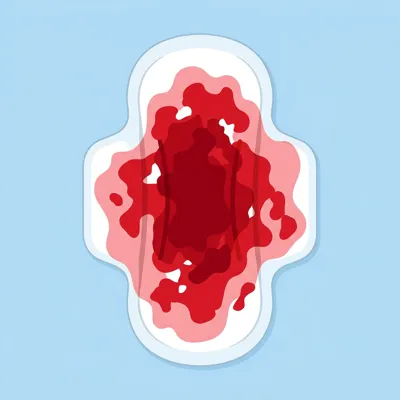
Your period pain is real and it has a physical cause. No, it's not "in your head," and pain that keeps you in bed is not just part of being a woman. Having pain during your period is common, but "common" does not mean "normal." When the pain becomes unbearable, it deserves answers, not silence.
Where does period pain come from?
The answer comes down to one word: prostaglandins (molecules that trigger the uterus to contract). Every month, your endometrium (the lining of your uterus) thickens to welcome a pregnancy. When there is no pregnancy, your body sheds it.
To do this, it releases these prostaglandins, which make the uterus contract like a muscle. The more your body makes, the stronger the cramps, in your lower abdomen, back or thighs [1][2].
Mild to moderate pain in the first days is common: between 50 and 90% of adolescents and young women report it [2]. If a standard painkiller is enough and you can get through your day, we call it ordinary period pain. But there is a clear line between "uncomfortable" and "unbearable."
Sources (2)
- [1] Zondervan KT, Becker CM, Missmer SA. Endometriosis. N Engl J Med. 2020;382(13):1244-1256. doi:10.1056/NEJMra1810764
- [2] Armour M, Parry K, Manohar N, et al. The Prevalence and Academic Impact of Dysmenorrhea in 21,573 Young Women: A Systematic Review and Meta-Analysis. J Womens Health (Larchmt). 2019;28(8):1161-1171. doi:10.1089/jwh.2018.7615
Endometriosis: when tissue settles outside the uterus
With endometriosis, tissue similar to the endometrium grows outside the uterus: on the ovaries, tubes, bowel or bladder [1]. Each month this tissue responds to hormones, bleeds and inflames the surrounding tissues, with no way out.
Two mechanisms keep the pain going. The inflammation irritates nerves with every cycle. Then those nerves, stimulated month after month, lower their threshold: signals that were once painless start to hurt [1]. You are not becoming "more fragile," your nervous system is adapting.
This condition affects about 1 woman in 10 of reproductive age, that's 190 million women and girls worldwide [5]. Between 50 and 90% of them have very painful periods, compared with 20 to 25% in the general population [1]. The pain also has a real cost: affected women lose nearly 11 hours of productivity per week on average [8]. None of this is your fault.
Sources (4)
- [1] Zondervan KT, Becker CM, Missmer SA. Endometriosis. N Engl J Med. 2020;382(13):1244-1256. doi:10.1056/NEJMra1810764
- [5] World Health Organization (WHO). Endometriosis fact sheet. 2023. https://www.who.int/news-room/fact-sheets/detail/endometriosis
- [8] Nnoaham KE, Hummelshoj L, Webster P, et al. Impact of endometriosis on quality of life and work productivity: a multicenter study across ten countries. Fertil Steril. 2011;96(2):366-373.e8. doi:10.1016/j.fertnstert.2011.05.090
- [7] Janssen EB, Rijkers ACM, Hoppenbrouwers K, Meuleman C, d'Hooghe TM. Prevalence of endometriosis diagnosed by laparoscopy in adolescents with dysmenorrhea or chronic pelvic pain: a systematic review. Hum Reprod Update. 2013;19(5):570-582. doi:10.1093/humupd/dmt016
A diagnosis that takes 7 years, and it is not your fault
In France, an average of 7 years passes between the first symptoms and diagnosis [4]. This delay reflects a lack of training, not a failing on your part.
Good news: diagnosis no longer necessarily requires surgery. International guidelines now place clinical examination and imaging (ultrasound or MRI) as the first step. Laparoscopy (surgery through small incisions, under anaesthesia) is reserved for uncertain cases or for surgery itself [3].
One key point: a normal ultrasound does not rule out endometriosis. The superficial forms, which are the most common, often stay invisible on imaging [6]. If you're told "your scan is normal" while you're still in pain, you can ask for a specialist opinion.
You have the right to a second opinion. A pain diary, kept over two or three cycles, gives weight to your words. Associations such as EndoFrance or ENDOmind can point you to trained doctors [4].
Sources (3)
- [4] National Strategy to Combat Endometriosis. Ministry of Health and Prevention, France. 2022. https://sante.gouv.fr/
- [3] Becker CM, Bokor A, Heikinheimo O, et al. ESHRE guideline: endometriosis. Hum Reprod Open. 2022;2022(2):hoac009. doi:10.1093/hropen/hoac009
- [6] Nisenblat V, Bossuyt PM, Farquhar C, Johnson N, Hull ML. Imaging modalities for the non-invasive diagnosis of endometriosis. Cochrane Database Syst Rev. 2016;2(2):CD009591. doi:10.1002/14651858.CD009591.pub2
What can ease the pain
There is no single fix, but there is a combination suited to your situation, to be decided with your doctor.
- Heat: a hot water bottle on your lower abdomen relaxes the uterus, with an effect comparable to a first-line painkiller [2].
- Anti-inflammatories (ibuprofen, naproxen) target prostaglandins and work best at the first signs of pain [9]. They don't suit everyone and are not meant for long-term use without medical advice.
- Hormonal treatments: the combined pill taken continuously, a progestogen such as dienogest, or the levonorgestrel intrauterine device (Mirena) put lesions to rest and reduce pain [3].
- Nerve stimulation (TENS): a small device that "scrambles" pain signals, useful if you'd rather avoid hormones [10].
If these options aren't enough, laparoscopy can remove the lesions: it relieves 60 to 80% of women who have it, but recurrence happens in 20 to 40% of cases within 5 years, which is why hormonal treatment is often offered afterwards [3].
Finally, pregnancy is not a treatment: the lesions persist and the pain often returns after birth [11]. If someone suggests you "have a baby" to cure it, you can ask for proper medical care instead.
Sources (5)
- [2] Armour M, Parry K, Manohar N, et al. The Prevalence and Academic Impact of Dysmenorrhea in 21,573 Young Women: A Systematic Review and Meta-Analysis. J Womens Health (Larchmt). 2019;28(8):1161-1171. doi:10.1089/jwh.2018.7615
- [9] Marjoribanks J, Ayeleke RO, Farquhar C, Proctor M. Nonsteroidal anti-inflammatory drugs for dysmenorrhoea. Cochrane Database Syst Rev. 2015;(7):CD001751. doi:10.1002/14651858.CD001751.pub3
- [3] Becker CM, Bokor A, Heikinheimo O, et al. ESHRE guideline: endometriosis. Hum Reprod Open. 2022;2022(2):hoac009. doi:10.1093/hropen/hoac009
- [10] Proctor ML, Smith CA, Farquhar CM, Stones RW. Transcutaneous electrical nerve stimulation and acupuncture for primary dysmenorrhoea. Cochrane Database Syst Rev. 2002;(1):CD002123. doi:10.1002/14651858.CD002123
- [11] Leone Roberti Maggiore U, Ferrero S, Mangili G, et al. A systematic review on endometriosis during pregnancy: diagnosis, misdiagnosis, complications and outcomes. Hum Reprod Update. 2016;22(1):70-103. doi:10.1093/humupd/dmv045
You know your body better than anyone. Pain that organises your whole life is not something to just accept, and you have the right to demand care. This week, start a pain diary: note the intensity and the impact on your activities each day, then book an appointment with the words to make yourself heard. These are not "just periods."
This article is for information only and does not replace the advice of a health professional. If a symptom worries you, talk to a doctor.