Sore, tender breasts in perimenopause: what if the pain is actually reassuring?
Why your breasts pull 'just like before your period', what it means, and the rare signs that do need a doctor.
3 min read
That tightness in your chest that shows up without warning, the heaviness, a firmer spot under your fingers: the fear that rises is not an overreaction. Here's what you're rarely told this plainly. A breast that hurts almost always falls on the reassuring side. Early breast cancer, by contrast, is usually painless.
Pain is frightening, but it usually reassures
Let's start with the fact that changes everything. Early breast cancer usually doesn't hurt: it settles in quietly, with no tension or pulling [4][5].
Breast pain, on the other hand, is remarkably common. Up to 70% of women feel it at some point in their lives [1][2]. And pain on its own, with no lump you can feel, is linked to cancer in fewer than 3% of cases [1].
In other words, your panic is aiming at the wrong target. What truly concerns doctors is not what hurts, but what stays painless: a hard lump, skin that changes. So you can swap panic for calm vigilance.
Sources (4)
- [4] National Institute for Health and Care Excellence. Suspected cancer: recognition and referral (NG12). NICE; 2021.
- [5] Santen RJ, Mansel R. Benign breast disorders. N Engl J Med. 2005;353(3):275-285. doi:10.1056/NEJMra035692
- [1] Goyal A. Breast pain. BMJ Clin Evid. 2014;2014:0812.
- [2] Salzman B, Fleegle S, Tully AS. Common breast problems. Am Fam Physician. 2012;86(4):343-349.
Where the tension comes from: the hormonal mechanism
Before, your breasts swelled a little before your period, then settled: a steady metronome. During perimenopause that metronome breaks down. Your ovaries no longer work regularly, so your estrogen sometimes climbs very high, then crashes, with no schedule [3][5].
Estrogen tells your breast tissue to grow and to hold onto water. Picture a sponge: under the hormonal signal, the tissue fills with fluid, swells, and presses on the nerves inside [5]. Hence the heaviness and pulling. Salt makes that water retention worse, which is why a salty meal can leave you more tender.
This hormone-driven pain, called cyclical, is the most common kind: it affects about two in three women who see a doctor for breast pain [2][3]. That's why it feels 'just like before my period': same mechanism, but it no longer follows your calendar.
Sources (3)
- [3] Royal College of Obstetricians and Gynaecologists. Green-top Guideline No.31: Management of Mastalgia. RCOG; 2015.
- [5] Santen RJ, Mansel R. Benign breast disorders. N Engl J Med. 2005;353(3):275-285. doi:10.1056/NEJMra035692
- [2] Salzman B, Fleegle S, Tully AS. Common breast problems. Am Fam Physician. 2012;86(4):343-349.
What actually soothes it, starting tonight
Understanding already helps, but here are concrete levers, from the most effective to the simplest.
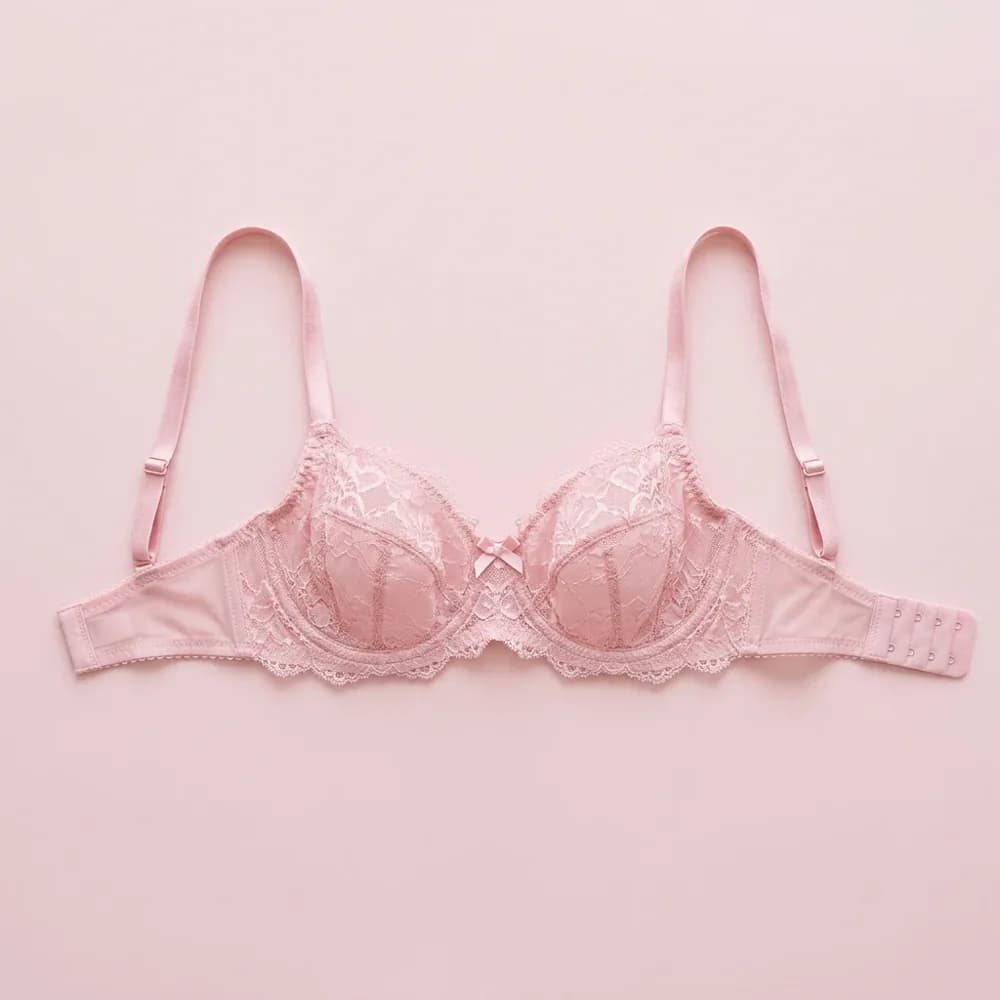
- A well-fitted supportive bra limits the pull on tender tissue and eases pain in many women [9][10]. The right size matters more than the price; some wear a sports bra at night during flare-ups.
- Less salt and caffeine may help reduce fluid retention. The evidence is modest, but it's low-risk, so trial it for a few weeks [3].
- Warm or cool compresses, whichever feels better, relax the tissue and calm the heaviness [5].
If the pain is sharp, a topical anti-inflammatory gel (such as diclofenac, applied to the sore area) has real, proven benefit, with little effect on the rest of your body [9]. Ask your pharmacist or doctor. Hormonal treatments are reserved for intense, stubborn cases because of their side effects: they're not the first option [9]. The good news: once menopause settles in, this cyclical pain fades or eases sharply in most women [8].
Sources (5)
- [9] Groen JW, Grosfeld S, Wilschut JA, et al. Cyclic and non-cyclic breast-pain: A systematic review on pain reduction, side effects, and quality of life for various treatments. Eur J Obstet Gynecol Reprod Biol. 2017;219:74-93.
- [10] Scurr J, Hedger W, Morris P, Brown N. The prevalence, severity, and impact of breast pain in the general population. Breast J. 2014;20(5):508-513. doi:10.1111/tbj.12305
- [3] Royal College of Obstetricians and Gynaecologists. Green-top Guideline No.31: Management of Mastalgia. RCOG; 2015.
- [5] Santen RJ, Mansel R. Benign breast disorders. N Engl J Med. 2005;353(3):275-285. doi:10.1056/NEJMra035692
- [8] Davies EL, Gateley CA, Miers M, Mansel RE. The long-term course of mastalgia. J R Soc Med. 1998;91(9):462-464. doi:10.1177/014107689809100904
The signs that do need checking without waiting
'Pain reassures' never means 'never see a doctor'. Here are the signs that warrant a prompt visit [4][5].
- A hard, fixed lump that doesn't move under your fingers.
- Any nipple discharge, especially if it's bloody or from one breast only.
- Skin that pulls, dimples, or looks like orange peel.
- A nipple that turns inward when it didn't before.
The key: the worrying signs are almost always painless, fixed, and one-sided, unlike hormonal pain that comes and goes in both breasts [4][5]. For diffuse cyclical pain, imaging usually isn't needed; but pain always in the same spot that persists deserves a targeted exam [7].
One non-negotiable rule: never skip your screening mammogram. Screening catches exactly what you can't feel, no matter how your breasts feel [6].
Sources (4)
- [4] National Institute for Health and Care Excellence. Suspected cancer: recognition and referral (NG12). NICE; 2021.
- [5] Santen RJ, Mansel R. Benign breast disorders. N Engl J Med. 2005;353(3):275-285. doi:10.1056/NEJMra035692
- [7] Harvey JA, Mahoney MC, Newell MS, et al. ACR Appropriateness Criteria - Breast Pain. J Am Coll Radiol. 2018;15(11S):S276-S282.
- [6] Institut National du Cancer / Santé publique France. Dépistage organisé du cancer du sein et données d'incidence. INCa; 2023.
You leave with a way to read your body. Diffuse, shifting pain in both breasts, 'just like before your period', is your hormones, and it's very largely harmless. A hard, fixed lump, discharge, or skin that retracts: that goes to a doctor without waiting. Starting tonight, adjust your bra, try compresses, ease up on salt and caffeine, and log your breast tenderness in Endora to watch its logic emerge. This roller coaster does come to an end.
This article is for information only and does not replace the advice of a health professional. If a symptom worries you, talk to a doctor.