What if your fatigue is low iron?
At menopause, everything gets blamed on hormones. A simple, testable deficiency often gets missed.
3 min read
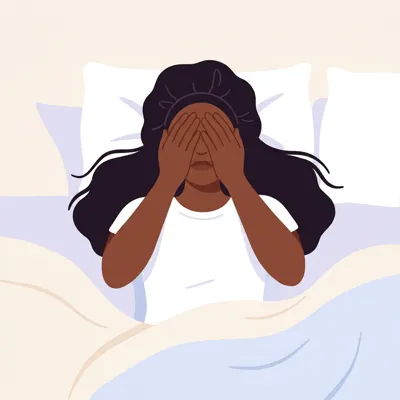
You wake up already drained, and no one around you sees how heavy this tiredness really is. You've been told "it's your age," "it's hormonal." But one very common cause often gets missed: low iron. It hits menstruating women hardest, it's simple to test for, and it's fixable.
This tiredness isn't "your age": it can come from iron
Your fatigue is real and it has a physical cause. Between 30 and 50% of women report this exhaustion during the transition to menopause [1]. You're not being dramatic, and you're not imagining it.
Iron builds hemoglobin (the molecule that carries oxygen in your blood) [2]. When iron runs low, every cell gets less fuel: deep fatigue, breathlessness, no real recovery.
Here's what many people miss: this tiredness can set in long before any anemia. Iron deficiency without anemia is real, and its main symptom is fatigue itself [3]. In one trial, non-anemic women with low reserves saw their fatigue drop by nearly half on iron, far more than on a placebo [4].
In other words, you can be exhausted because of iron while a "basic" blood test looks normal.
Sources (4)
- [1] SWAN (Study of Women's Health Across the Nation). Fatigue and the menopausal transition. 2019.
- [2] Camaschella C. Iron-Deficiency Anemia. N Engl J Med. 2015;372(19):1832-1843. doi:10.1056/NEJMra1401038
- [3] Pratt JJ, Khan KS. Non-anaemic iron deficiency - a disease looking for recognition of diagnosis: a systematic review. Eur J Haematol. 2016;96(6):618-628.
- [4] Vaucher P, Druais PL, Waldvogel S, Favrat B. Effect of iron supplementation on fatigue in nonanemic menstruating women with low ferritin: a randomized controlled trial. CMAJ. 2012;184(11):1247-1254.
A "normal" blood test can miss your reserves
Think of your iron like money. The hemoglobin measured by a CBC (a complete blood count, the standard test) is the cash in your wallet. Ferritin is different: it measures your savings, the iron your body keeps in reserve [2].
When iron starts running low, your body drains the savings first to keep the cash looking fine. So your CBC can read perfect while your reserves are empty [3]. Someone says "it's all normal," and you go home still exhausted.
Ferritin is now the most reliable marker of your iron stores [5]. So make the request precise: ask explicitly for a ferritin test, not just "a blood test."
One nuance: ferritin can rise falsely with inflammation or infection [2]. That's why your doctor interprets it in context, never a single number alone.
Sources (3)
- [2] Camaschella C. Iron-Deficiency Anemia. N Engl J Med. 2015;372(19):1832-1843. doi:10.1056/NEJMra1401038
- [3] Pratt JJ, Khan KS. Non-anaemic iron deficiency - a disease looking for recognition of diagnosis: a systematic review. Eur J Haematol. 2016;96(6):618-628.
- [5] Daru J, Allotey J, Peña-Rosas JP, Khan KS. Serum ferritin thresholds for the diagnosis of iron deficiency in pregnancy: a systematic review. Transfus Med. 2017;27(3):167-174.
Heavy periods or a copper IUD can quietly drain you
Blood lost is iron lost. Every period empties part of your reserves, and menstrual losses are the leading cause of iron deficiency in menstruating women [6].
Perimenopause makes it worse: swinging hormones often make periods heavier and longer. A bleed counts as heavy the moment it affects your quality of life, and that alone justifies an iron check [7].
A copper IUD (an effective, hormone-free contraceptive) can increase the volume and length of your periods [8]. For many women that's harmless; if your reserves were already fragile, this extra leak can tip the balance.
There's also a little-discussed iron-linked symptom: restless legs syndrome (that irresistible urge to move your legs at night). Your brain needs iron to make dopamine, which controls movement; a shortfall can trigger this restlessness and fragment your sleep [9].
Good news: you can act on the flow. Tranexamic acid can reduce heavy periods, and other options (hormonal contraception or a hormonal IUD) are worth discussing with your doctor [7].
Sources (4)
- [6] Fernández-Jiménez MC, Moreno G, Wright I, et al. Iron Deficiency in Menstruating Adult Women: Much More than Anemia. Womens Health Rep. 2020;1(1):26-35.
- [7] National Institute for Health and Care Excellence (NICE). Heavy menstrual bleeding: assessment and management (NG88). 2018.
- [8] Hubacher D, Chen PL, Park S. Side effects from the copper IUD: do they decrease over time? Contraception. 2009;79(5):356-362.
- [9] Allen RP, Picchietti DL, Garcia-Borreguero D, et al. Restless legs syndrome/Willis-Ekbom disease diagnostic criteria: updated International RLS Study Group consensus criteria. Sleep Med. 2014/2018.
Never take iron blind: test first
One absolute safety rule: never supplement iron without a test. The measurement first, the iron second.
Why? Your body has no simple way to clear excess iron. Above a certain intake, too much can be harmful, which is why safe upper limits have been set [10]. Taking it "just in case" when you're not low can quietly do you harm.
If your ferritin is low, what comes next is often simple. Oral iron rebuilds your reserves and lifts fatigue over a few weeks to two or three months [4]. Data suggest taking it every other day improves absorption and eases stomach upset. Vitamin C helps absorption; it's best to keep tea and coffee away from the dose. If the deficiency is intense or poorly tolerated, intravenous iron exists, under medical supervision [4].
And if your ferritin comes back normal despite the fatigue? Iron is ruled out, and that's valuable: your doctor can look elsewhere (thyroid, sleep, hormones) instead of going in circles.
Sources (2)
- [10] European Food Safety Authority (EFSA). Tolerable Upper Intake Levels for Vitamins and Minerals - Iron. 2004.
- [4] Vaucher P, Druais PL, Waldvogel S, Favrat B. Effect of iron supplementation on fatigue in nonanemic menstruating women with low ferritin: a randomized controlled trial. CMAJ. 2012;184(11):1247-1254.
You're not stuck with this fatigue for years. Walk out with a plan: ask explicitly for a ferritin test, mention periods that have become very heavy or a copper IUD, and never supplement without a check first. Logging your fatigue and your periods week by week, in Endora, gives you a clear record to bring in. You know your body; this time, you have the words to be heard.
This article is for information only and does not replace the advice of a health professional. If a symptom worries you, talk to a doctor.