Endo-belly: why your stomach swells, and what can help
It's not "just bloating." Here are the real causes of this swelling, and concrete things that can help.
4 min read
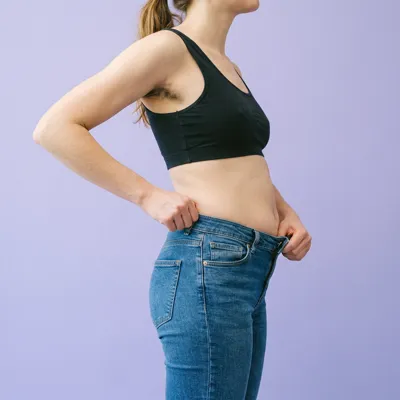
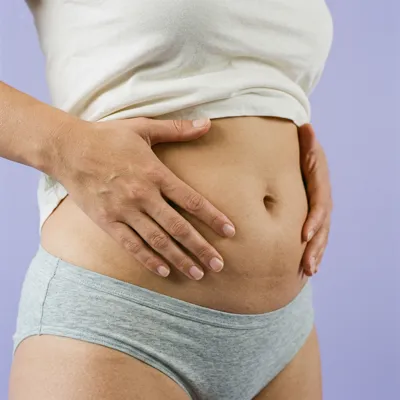
Your belly swells within hours, sometimes until you look pregnant, then goes back down. This is not "just bloating," and it's not in your head. This swelling has a name, endo-belly, and it's a recognized symptom of endometriosis. Nearly 96% of women with the disease live with it. Here's why, and what can ease it.
A real symptom of endometriosis, not just bloating
Your bloating is real and documented. Endo-belly, this sometimes dramatic abdominal swelling, is a recognized digestive symptom of endometriosis. European guidelines call for systematically looking for these digestive problems [1].
And it is very common. Nearly 96% of women with the disease report bloating, compared to 64% in a control group [2b]. Up to 90% have at least one digestive symptom: bloating, nausea, constipation, or diarrhea [3]. So this is not a minor detail.
What sets endo-belly apart from ordinary bloating is its intensity. The belly can swell within a few hours. Most importantly, this swelling happens even when the intestine is not affected by the disease [4]. That explains why some digestive tests come back "normal" while the belly keeps swelling.
Sources (4)
- [1] ESHRE Endometriosis Guideline Development Group. Endometriosis: diagnosis and management. European Society of Human Reproduction and Embryology. 2022. (Inclut les recommandations sur l'activité physique et la prise en charge multidisciplinaire.)
- [2b] Luscombe GM, Markham R, Judio M, Grigoriu A, Fraser IS. Abdominal bloating: an under-recognized endometriosis symptom. J Obstet Gynaecol Can. 2009;31(12):1159-1171. PMID 20085682.
- [3] Maroun P, Cooper MJW, Reid GD, Keirse MJNC. Relevance of gastrointestinal symptoms in endometriosis. Australian and New Zealand Journal of Obstetrics and Gynaecology. 2009;49(4):411-414. PMID 19694698.
- [4] Zondervan KT, Becker CM, Missmer SA. Endometriosis. New England Journal of Medicine. 2020;382(13):1244-1256.
Three physical mechanisms explain the swelling
No, it's not because you "ate badly." Three physical mechanisms combine.
Neighborhood inflammation. Picture your pelvis as a small neighborhood where the uterus, ovaries, intestine, and bladder live side by side. Endometriosis lesions there constantly release inflammatory substances [4]. These signals irritate the wall of the nearby intestine, which contracts poorly, traps gas, and swells [4][1].
Imbalanced gut flora. Your intestine is home to billions of bacteria, the microbiota (the gut flora). With endometriosis, this balance is disrupted: food ferments more and produces gas [5]. Some bacteria even recycle estrogens instead of eliminating them, which keeps the disease going [6].
Adhesions. Chronic inflammation creates scar tissue, a kind of bridge that "glues" organs together [4]. When it reaches the intestine, it compresses it: gas gets trapped and the belly swells, sometimes suddenly.
Sources (4)
- [4] Zondervan KT, Becker CM, Missmer SA. Endometriosis. New England Journal of Medicine. 2020;382(13):1244-1256.
- [1] ESHRE Endometriosis Guideline Development Group. Endometriosis: diagnosis and management. European Society of Human Reproduction and Embryology. 2022. (Inclut les recommandations sur l'activité physique et la prise en charge multidisciplinaire.)
- [5] Shan J, Ni Z, Cheng W, Zhou L, Zhai D, Sun S, Yu C. Gut microbiota imbalance and its correlations with hormone and inflammatory factors in patients with stage 3/4 endometriosis. Archives of Gynecology and Obstetrics. 2021.
- [6] Laschke MW, Menger MD. The gut microbiota: a puppet master in the pathogenesis of endometriosis? American Journal of Obstetrics and Gynecology. 2016;215(1):68.e1-68.e4. PMID 26901277.
What can worsen endo-belly (and it's not your fault)
None of these factors is your fault. They are mechanisms tied to the disease, not to something you did "wrong."
- The hormonal cycle. Just before your period, the drop in progesterone releases prostaglandins (inflammatory molecules) that stimulate both the uterus and the intestine [4]. The swelling is often stronger before and during your period, but it can happen at any time [3].
- Chronic stress. It's a consequence of living with a painful disease, not a cause you would choose. Stress releases cortisol, which increases intestinal inflammation and slows digestion.
- Certain foods. They amplify bloating [8][9]. The culprits: FODMAPs (fermentable sugars in wheat, onion, garlic, some fruits) and inflammatory foods like alcohol or refined sugars.
- Forced inactivity. When pain keeps you in bed, transit slows and gas builds up [1]. This is not a reproach, it's a physical mechanism.
Sources (5)
- [4] Zondervan KT, Becker CM, Missmer SA. Endometriosis. New England Journal of Medicine. 2020;382(13):1244-1256.
- [3] Maroun P, Cooper MJW, Reid GD, Keirse MJNC. Relevance of gastrointestinal symptoms in endometriosis. Australian and New Zealand Journal of Obstetrics and Gynaecology. 2009;49(4):411-414. PMID 19694698.
- [8] Sverrisdóttir UÁ, Hansen S, Rudnicki M. Impact of diet on pain perception in women with endometriosis: a systematic review. Eur J Obstet Gynecol Reprod Biol. 2022;271:245-249. PMID 35245715. doi:10.1016/j.ejogrb.2022.02.028
- [9] Moore JS, Gibson PR, Perry RE, Burgell RE. Endometriosis in patients with irritable bowel syndrome: Specific symptomatic and demographic profile, and response to the low FODMAP diet. Australian and New Zealand Journal of Obstetrics and Gynaecology. 2017;57(2):201-205. PMID 28303579. doi:10.1111/ajo.12594
- [1] ESHRE Endometriosis Guideline Development Group. Endometriosis: diagnosis and management. European Society of Human Reproduction and Embryology. 2022. (Inclut les recommandations sur l'activité physique et la prise en charge multidisciplinaire.)
What can ease it, and who can help
None of these avenues is a magic wand, but each can bring a little comfort. At your own pace, with no obligation.
- In the moment. A hot water bottle on your belly relaxes the intestinal muscles. Lying on your left side or in child's pose helps gas move through. Five minutes of belly breathing calms the nervous system.
- Gentle movement. Walking, swimming, or adapted yoga improve transit and reduce inflammation [1][7]. One study shows that two yoga sessions a week for eight weeks reduce pelvic pain [7]. Aim for about 150 minutes a week (WHO), but a few minutes count on hard days.
- Food, without deprivation. Temporarily cutting FODMAPs improved bloating in 72% of women who also had irritable bowel syndrome [9]. A diet rich in omega-3 and fiber also helps [8]. A two-week food diary often reveals your triggers.
- Stress. Cardiac coherence (breathe in 5 seconds, out 5 seconds, for 5 minutes) soothes the vagus nerve, which links brain and gut.
On the gut-flora side, some probiotic strains show encouraging but still early results. They are not a treatment for endometriosis, best discussed with your care team [5][6].
You don't have to handle this alone. A gastroenterologist, a dietitian, a physiotherapist in pelvic rehabilitation, or a psychologist can support you [1][9]. If you take hormonal treatment, raise bloating with your gynecologist: by reducing the stimulation of lesions, it can also calm endo-belly [1].
Sources (6)
- [1] ESHRE Endometriosis Guideline Development Group. Endometriosis: diagnosis and management. European Society of Human Reproduction and Embryology. 2022. (Inclut les recommandations sur l'activité physique et la prise en charge multidisciplinaire.)
- [7] Gonçalves AV, Barros NF, Bahamondes L. The practice of hatha yoga for the treatment of pain associated with endometriosis. Journal of Alternative and Complementary Medicine. 2017.
- [9] Moore JS, Gibson PR, Perry RE, Burgell RE. Endometriosis in patients with irritable bowel syndrome: Specific symptomatic and demographic profile, and response to the low FODMAP diet. Australian and New Zealand Journal of Obstetrics and Gynaecology. 2017;57(2):201-205. PMID 28303579. doi:10.1111/ajo.12594
- [8] Sverrisdóttir UÁ, Hansen S, Rudnicki M. Impact of diet on pain perception in women with endometriosis: a systematic review. Eur J Obstet Gynecol Reprod Biol. 2022;271:245-249. PMID 35245715. doi:10.1016/j.ejogrb.2022.02.028
- [5] Shan J, Ni Z, Cheng W, Zhou L, Zhai D, Sun S, Yu C. Gut microbiota imbalance and its correlations with hormone and inflammatory factors in patients with stage 3/4 endometriosis. Archives of Gynecology and Obstetrics. 2021.
- [6] Laschke MW, Menger MD. The gut microbiota: a puppet master in the pathogenesis of endometriosis? American Journal of Obstetrics and Gynecology. 2016;215(1):68.e1-68.e4. PMID 26901277.
Endo-belly has identified physical causes: inflammation, imbalanced gut flora, adhesions, and hormonal shifts. It's not in your head, and it's not a lack of willpower. Every step that eases it, a hot water bottle, five minutes of breathing, a trigger food you spotted, is a real win. You don't have to solve everything at once. Log your episodes in Endora to spot your triggers and discuss them with your doctor.
This article is for information only and does not replace the advice of a health professional. If a symptom worries you, talk to a doctor.