My bones are getting fragile: how to plan ahead without panic
When to get your bone density scan, when it's reimbursed, and how to read your own T-score, before the first fracture.
4 min read
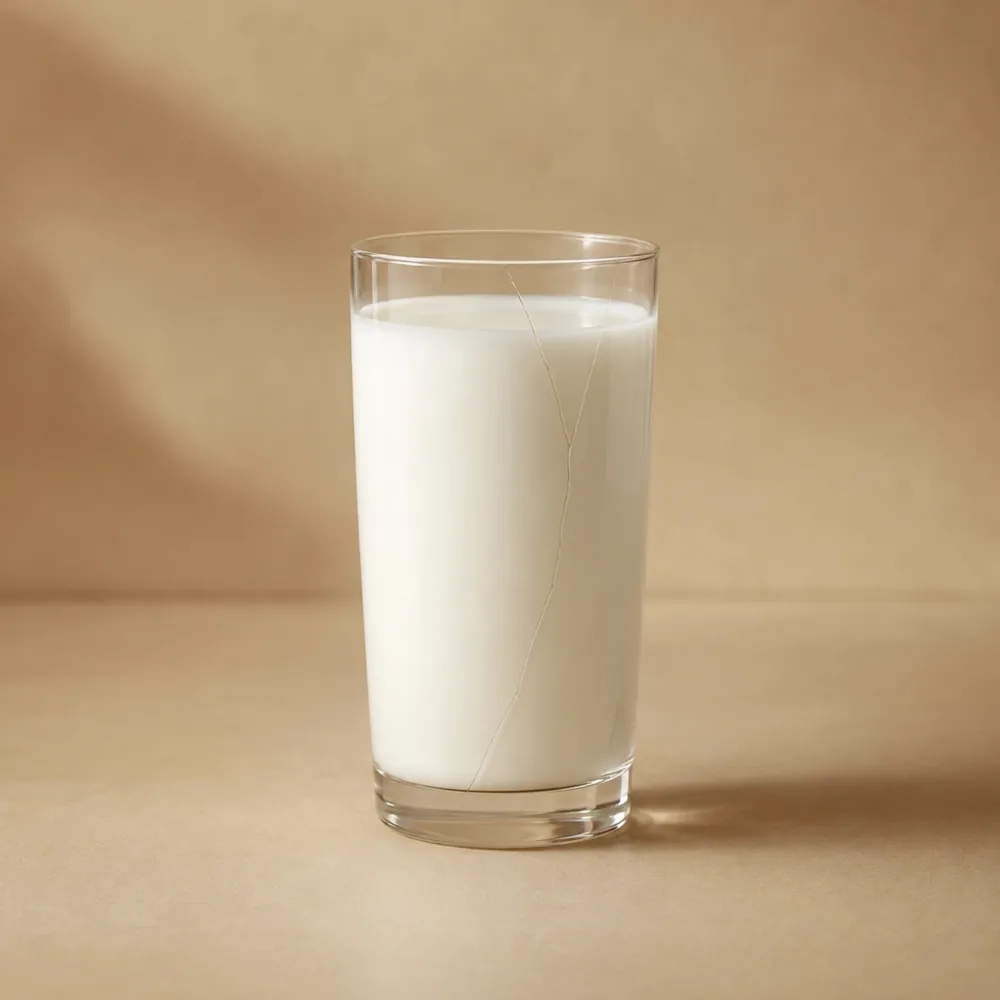
You've watched a relative move differently since she broke her hip, and a question settles in: what if my bones were thinning without me noticing? That worry isn't paranoia, it's clear-eyed. Osteoporosis makes no sound and no pain, until the day a bone gives way [4]. That very silence is what lets you act early, before the first fracture, not after.
Your bones thin in silence, until the first fracture
Your bones aren't inert stone. They're living tissue, rebuilt around the clock by two crews: one tears down old bone, the other lays new bone in its place. As long as they keep pace, your skeleton stays strong.
At menopause, estrogen drops. Until then it kept the demolition crew in check. Breakdown now outpaces rebuilding, and you lose bone faster, especially in the first five to ten years [4][9]. Over that window, you can lose up to 2 to 3% of bone mass a year [9].
All of this happens without pain or any warning. Often the first sign is already a fracture: a wrist after a minor fall, a spine that compresses, or the hip [4]. Nearly 7 in 10 affected women aren't diagnosed until that first break [10].
So your worry is valid. But this silence is also your ally: it leaves time to act, in women at risk, before anything gives way.
Sources (3)
- [4] Compston JE, McClung MR, Leslie WD. Osteoporosis. The Lancet. 2019;393(10169):364-376. doi:10.1016/S0140-6736(18)32112-3
- [9] GRIO (Groupe de Recherche et d'Information sur les Ostéoporoses). Recommandations sur la prise en charge de l'ostéoporose post-ménopausique; 2021.
- [10] International Osteoporosis Foundation (IOF). Rapport mondial sur l'ostéoporose; 2021.
Being menopausal isn't enough: your risk factors decide
A stubborn myth: "I'm menopausal, so I'm entitled to a reimbursed scan." In France, that's not how it works, and the logic makes sense [2]. Menopause alone doesn't trigger the prescription: you don't pile scans onto women who don't need them.
What truly justifies the bone density scan (the ostéodensitométrie, a painless measure of bone density) is a specific risk factor. Public health insurance reimburses it notably for [2]:
- a fracture from no major trauma (a fall from your own height)
- early menopause (before 40)
- long-term corticosteroid use
- a hip fracture in a parent
- low body weight (low BMI)
- certain conditions (overactive thyroid or parathyroid)
Before prescribing, your doctor weighs your overall profile. They may use FRAX, a calculator combining age, history, weight and smoking to estimate your 10-year fracture risk [7][12]. If you aren't offered the scan, it isn't neglect: your profile doesn't justify it yet. And if risk factors do describe you, you have every right to ask.
Sources (4)
- [2] Haute Autorité de Santé (HAS). Ostéodensitométrie (absorptiométrie osseuse sur 2 sites par méthode biphotonique) - Conditions de prise en charge. HAS / Assurance Maladie; 2021.
- [7] National Institute for Health and Care Excellence (NICE). Osteoporosis: assessing the risk of fragility fracture (CG146). NICE Guideline; 2017.
- [12] Kanis JA, Johansson H, Harvey NC, McCloskey EV. A brief history of FRAX. Arch Osteoporos. 2018;13(1):118. doi:10.1007/s11657-018-0510-0
- [11] INSERM. Dossier d'information : ostéoporose; 2022.
Understanding the scan and reading your T-score, plainly
The scan isn't intimidating. The ostéodensitométrie, or DXA, measures the density of your bones at your lower spine and hip [1]. You stay clothed, lying on a table, and a scanning arm passes over you. It's painless, quick (about ten minutes), and the radiation dose is very low.
International guidelines suggest screening every woman from age 65, and earlier if your risk matches that of a 65-year-old [3][7]. There's no single cutoff age: your own history decides.
The result is your T-score. It compares your bones to a healthy young woman of 30, at peak bone strength [8]. The further the number falls below zero, the thinner your bones. The reference points, set by health authorities [8]:
- above -1: normal density
- between -1 and -2.5: osteopenia, a watch zone, not a disease
- at or below -2.5: osteoporosis [1][8]
A number alone decides nothing. Two women with the same T-score can get different advice, because the decision combines the T-score, any past fracture and overall risk [1][5]. Don't confuse T-score with Z-score either: the latter compares you to women your age. After menopause, the T-score is what counts [1].
Sources (5)
- [1] Kanis JA, Cooper C, Rizzoli R, Reginster JY (Scientific Advisory Board of ESCEO and Committees of IOF). European guidance for the diagnosis and management of osteoporosis in postmenopausal women. Osteoporos Int. 2019;30(1):3-44. doi:10.1007/s00198-018-4704-5
- [3] US Preventive Services Task Force, Curry SJ, Krist AH, et al. Screening for Osteoporosis to Prevent Fractures: US Preventive Services Task Force Recommendation Statement. JAMA. 2018;319(24):2521-2531. doi:10.1001/jama.2018.7498
- [7] National Institute for Health and Care Excellence (NICE). Osteoporosis: assessing the risk of fragility fracture (CG146). NICE Guideline; 2017.
- [8] Cosman F, de Beur SJ, LeBoff MS, et al. (National Osteoporosis Foundation). Clinician's Guide to Prevention and Treatment of Osteoporosis. Osteoporos Int. 2014;25(10):2359-2381. doi:10.1007/s00198-014-2794-2
- [5] Eastell R, Rosen CJ, Black DM, Cheung AM, Murad MH, Shoback D. Pharmacological Management of Osteoporosis in Postmenopausal Women: An Endocrine Society Clinical Practice Guideline. J Clin Endocrinol Metab. 2019;104(5):1595-1622. doi:10.1210/jc.2019-00221
On hormone therapy, bones already protected, plus what you can do now
If you take menopausal hormone therapy (the THM, or MHT), one point can spare you needless scans. MHT restores the estrogen you're missing: it slows bone breakdown and reduces fractures of the spine, hip and elsewhere [6][13]. It's now a first-line option for menopause symptoms [13].
The upshot: on well-managed MHT, a routine bone density scan usually isn't needed, since the protection is already in place [6]. But that protection fades once you stop. How long to stay on MHT, and any check, are discussed with your doctor [13].
The scan measures, it doesn't treat. Bone responds to what you ask of it:
- weight-bearing movement (brisk walking, stairs, strength work) builds bone and improves balance, so you fall less [8]
- calcium and vitamin D support bone health, without replacing treatment [8]
If osteoporosis is diagnosed, effective treatments exist: bisphosphonates first-line, denosumab as an alternative [5]. Your doctor chooses the right option with you, based on your T-score and risk factors.
Sources (4)
- [6] Levin VA, Jiang X, Kagan R. Estrogen therapy for osteoporosis in the modern era. Osteoporos Int. 2018;29(5):1049-1055. doi:10.1007/s00198-018-4414-z
- [13] The 2022 Hormone Therapy Position Statement of The North American Menopause Society (NAMS) Advisory Panel. Menopause. 2022;29(7):767-794.
- [8] Cosman F, de Beur SJ, LeBoff MS, et al. (National Osteoporosis Foundation). Clinician's Guide to Prevention and Treatment of Osteoporosis. Osteoporos Int. 2014;25(10):2359-2381. doi:10.1007/s00198-014-2794-2
- [5] Eastell R, Rosen CJ, Black DM, Cheung AM, Murad MH, Shoback D. Pharmacological Management of Osteoporosis in Postmenopausal Women: An Endocrine Society Clinical Practice Guideline. J Clin Endocrinol Metab. 2019;104(5):1595-1622. doi:10.1210/jc.2019-00221
You're no longer in the dark. Osteoporosis is silent, but that silence gives you a head start. The next step is simple: note your risk factors (early menopause, fractures, a family history of hip fracture, corticosteroids, low weight) and bring them to your doctor to decide, together, whether and when to scan. Keep your result to compare it over time. Bone isn't fixed: you can build it and strengthen it, at your own pace.
This article is for information only and does not replace the advice of a health professional. If a symptom worries you, talk to a doctor.