Brown spotting between periods: ordinary hormones or a signal to check?
How to tell perimenopausal hormone swings apart from bleeding that earns a real appointment.
4 min read
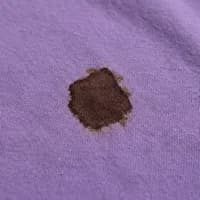
You go to the bathroom, glance down, and there it is: a small brown smudge where you expected nothing. These marks are real, and most of the time in perimenopause they tell an ordinary hormonal story. But "most of the time" isn't "always." Asking the question isn't you being dramatic; it's you listening to your body. Here's how to sort the ordinary from the short list that earns a check.
Brown is old blood, not "dirty" blood
Colour is the first thing you notice, and often the most worrying. So let's clear one thing up: brown isn't "dirty" blood.
It's simply blood that took its time leaving. When it lingers in the uterus, it oxidizes in contact with air, the way a sliced apple turns brown [2]. Bright red means fresh, fast blood; brown means older blood.
Here's the trap, though: colour tells you how long the blood took to leave, not how serious the cause is. "It's only brown" is not a green light. What really matters is timing and repetition.
A quick word on the lining. The endometrium (the wall lining your uterus) thickens each cycle, then sheds: that's your period. Its stability rests on two hormones, estrogen and progesterone [2]. When that balance wobbles, the wall lets go of small amounts of blood between periods.
Sources (1)
- [2] Critchley HOD, Maybin JA, Armstrong GM, Williams ARW. Physiology of the Endometrium and Regulation of Menstruation. Physiol Rev. 2020;100(3):1149-1179.
In perimenopause, ovulation spaces out and the lining sheds in bits
Here's the explanation that covers most cases. Spotting (light bleeding outside your period) becomes very common now.
In perimenopause, your ovaries ease off. You stop ovulating every cycle. Since ovulation triggers progesterone, the hormone that stabilizes the lining, without it the endometrium thickens under estrogen but has no "glue" [3]. So it sheds unevenly.
This irregularity is common: the data show that a large share of women in the transition report irregular or between-period bleeding [3][4]. Formally, a cycle-length change of 7 days or more marks the transition [5].
Three benign causes come up again and again:
- Perimenopausal hormone swings, on no schedule you can predict.
- Ovulation spotting: a brief estrogen dip mid-cycle, light and short, that tends to return at the same point [6].
- A recent contraceptive or MHT: your lining adjusts to the new dose. This is breakthrough bleeding. It affects up to 30 to 50% of new users and settles within three to six months [7]. Spotting on a new method doesn't mean it "isn't working" [7].
Sources (5)
- [3] Santoro N, Roeca C, Peters BA, Neal-Perry G. The Menopause Transition: Signs, Symptoms, and Management Options. J Clin Endocrinol Metab. 2021;106(1):1-15.
- [4] National Institute for Health and Care Excellence. Menopause: diagnosis and management (NG23). 2024.
- [5] Harlow SD, Gass M, Hall JE, et al. Executive summary of the Stages of Reproductive Aging Workshop +10 (STRAW+10). J Clin Endocrinol Metab. 2012;97(4):1159-1168.
- [6] Sweet MG, Schmidt-Dalton TA, Weiss PM, Madsen KP. Evaluation and management of abnormal uterine bleeding in premenopausal women. Am Fam Physician. 2012;85(1):35-43.
- [7] Faculty of Sexual and Reproductive Healthcare (FSRH). Problematic Bleeding with Hormonal Contraception. Clinical Guideline. 2015.
Three situations earn an appointment, even if the bleeding is light
Most spotting is ordinary. But a short list earns a real appointment. Reading it isn't panic, it's being wise.
Book a check if:
- Bleeding between periods keeps repeating, cycle after cycle, with no clear context [1].
- Bleeding happens after sex, even once: this always warrants a look at the cervix [13].
- Any bleeding appears after confirmed menopause (more than 12 months with no period) [8].
Why these three? Because they can point to a physical cause. Two are easy to picture: a polyp (a small tag of tissue inside the uterus or on the cervix) and a fibroid (a knot of muscle in the wall). Benign and common, they have fragile surfaces that bleed from light contact [10]. Polyps are found in 20 to 40% of women investigated for bleeding [11]; by age 50, most women have fibroids [12].
The strictest rule is about postmenopause. After 12 period-free months, the uterus shouldn't bleed at all [8]. Roughly 1 in 10 cases of postmenopausal bleeding turns out to be a lining cancer, highly treatable when caught early [9]. In the other 9 in 10, the cause is benign. That's the whole point of checking, without drama.
Sources (7)
- [1] Munro MG, Critchley HOD, Fraser IS, et al. The two FIGO systems for normal and abnormal uterine bleeding symptoms and classification of causes of abnormal uterine bleeding in the reproductive years (PALM-COEIN): 2018 revisions. Int J Gynecol Obstet. 2018;143(3):393-408.
- [13] National Institute for Health and Care Excellence. Suspected cancer: recognition and referral (NG12). 2015.
- [8] American College of Obstetricians and Gynecologists. Committee Opinion No. 734: The Role of Transvaginal Ultrasonography in Evaluating the Endometrium of Women With Postmenopausal Bleeding. Obstet Gynecol. 2018;131(5):e124-e129.
- [10] Clark TJ, Stevenson H. Endometrial Polyps and Abnormal Uterine Bleeding (AUB-P): What is the relationship, how are they diagnosed and how are they treated? Best Pract Res Clin Obstet Gynaecol. 2017;40:89-104.
- [11] Dreisler E, Stampe Sorensen S, Ibsen PH, Lose G. Prevalence of endometrial polyps and abnormal uterine bleeding in a Danish population aged 20-74 years. Acta Obstet Gynecol Scand. 2009;88(12):1395-1403.
- [12] Baird DD, Dunson DB, Hill MC, et al. High cumulative incidence of uterine leiomyoma in black and white women. Am J Obstet Gynecol. 2003;188(1):100-107.
- [9] Clarke MA, Long BJ, Del Mar Morillo A, et al. Association of Endometrial Cancer Risk With Postmenopausal Bleeding in Women: A Systematic Review and Meta-analysis. JAMA Intern Med. 2018;178(9):1210-1222.
What actually happens at the appointment, and how to arrive with data
If your situation ticks one of those boxes, the first-line test is usually a transvaginal ultrasound (a slim probe, quick) [8]. It measures the thickness of your lining. A thin lining is reassuring; above 4 mm after menopause, a biopsy (a small tissue sample) follows [8].
Sometimes a hysteroscopy (a thin camera passed into the uterus) lets the doctor see and remove a polyp in one go [1]. Most of these are done as outpatient procedures, and the large majority of stories end in a benign diagnosis.
Doubt is best fought with data. Log each episode: its colour, its point in the cycle, its context (after sex, a recent contraceptive). You turn a fuzzy impression into a readable pattern.
The app time-stamps these notes for you. On the day, you walk in with a concrete timeline instead of "it happens now and then." A dated log is hard to wave off as "just your age," and you get taken seriously faster.
Sources (2)
- [8] American College of Obstetricians and Gynecologists. Committee Opinion No. 734: The Role of Transvaginal Ultrasonography in Evaluating the Endometrium of Women With Postmenopausal Bleeding. Obstet Gynecol. 2018;131(5):e124-e129.
- [1] Munro MG, Critchley HOD, Fraser IS, et al. The two FIGO systems for normal and abnormal uterine bleeding symptoms and classification of causes of abnormal uterine bleeding in the reproductive years (PALM-COEIN): 2018 revisions. Int J Gynecol Obstet. 2018;143(3):393-408.
Those little brown marks don't have to be an anxious mystery anymore. In perimenopause, they usually tell a hormonal story: less ovulation, less progesterone, sometimes a contraceptive still settling in. You also know the exceptions that count: bleeding that repeats, bleeding after sex, and any bleeding after menopause. Tonight, log the date, the colour, and the context. One dated note can make your next appointment simpler.
This article is for information only and does not replace the advice of a health professional. If a symptom worries you, talk to a doctor.