Blood clots during your period: should you worry?
Telling common clots from the ones worth a doctor's visit, without downplaying what you're going through.
4 min read

You've spotted these dark clumps without daring to mention them, with one question in mind: is this serious? That doubt is valid. In most cases, clots are harmless. But some signs deserve attention, and up to 20 to 30% of women have periods that are too heavy. Here's how to tell where you stand.
A clot is blood that thickens before it flows out
During your period, the lining of your uterus (the endometrium) sheds and flows out, mixed with blood. To keep this mixture fluid, your body makes natural anticoagulants that dissolve small clots as they form [1].
When the flow is very heavy, these anticoagulants can't keep up. The blood clots before it leaves and forms those jelly-like clumps [1]. Think of a sink: the drain handles a trickle but overflows if you turn the tap on full.
These clots contain blood, fragments of endometrium, and fibrin (a clotting protein) [1]. Their dark colour comes from oxidation in the air. It's not "dirty" blood: it's just biology.
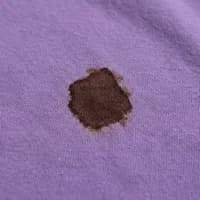
They mostly appear on the first one to two days, at peak flow [2]. As small as a grape (under a centimetre) or a small coin (one to two centimetres), and occasional, they are part of your body's normal functioning [3].
Sources (3)
- [1] Critchley HOD, Maybin JA, Armstrong GM, Williams ARW. Physiology of the endometrium and regulation of menstruation. Physiological Reviews. 2020;100(3):1149-1179. doi:10.1152/physrev.00031.2019
- [2] Marnach ML, Laughlin-Tommaso SK. Evaluation and management of abnormal uterine bleeding. Mayo Clinic Proceedings. 2019;94(2):326-335. doi:10.1016/j.mayocp.2018.12.012
- [3] American College of Obstetricians and Gynecologists (ACOG). FAQ – Heavy Menstrual Bleeding. 2022.
These signs show your flow exceeds what your body can handle
Many women spend years with very heavy periods thinking "that's just how it is." You have every right to question what you're going through.
Three concrete benchmarks deserve your attention:
- clots larger than a two-euro coin (about 2.5 cm), regularly, cycle after cycle: a marker of excessively heavy periods, what doctors call menorrhagia [2];
- having to change protection every hour for several hours, or periods lasting more than 7 days: your flow then exceeds the 80 ml per cycle threshold [4][5];
- lasting fatigue, breathlessness, pallor, or palpitations: these point to iron-deficiency anaemia [6].
This anaemia is common and underdiagnosed: up to 63% of women with menorrhagia develop it without knowing [6]. Intense pain that stops your activities, along with large clots, counts too. Your pain is real, and it can be relieved.
Sources (4)
- [2] Marnach ML, Laughlin-Tommaso SK. Evaluation and management of abnormal uterine bleeding. Mayo Clinic Proceedings. 2019;94(2):326-335. doi:10.1016/j.mayocp.2018.12.012
- [4] Munro MG, Critchley HOD, Fraser IS, FIGO Menstrual Disorders Committee. The two FIGO systems for normal and abnormal uterine bleeding symptoms and classification of causes of abnormal uterine bleeding in the reproductive years. International Journal of Gynecology & Obstetrics. 2018;143(3):393-408. doi:10.1002/ijgo.12666
- [5] National Institute for Health and Care Excellence (NICE). Heavy menstrual bleeding: assessment and management. NICE guideline [NG88]. 2018 (updated 2021).
- [6] Mansour D, Hofmann A, Gemzell-Danielsson K. A review of clinical guidelines on the management of iron deficiency and iron-deficiency anemia in women with heavy menstrual bleeding. Advances in Therapy. 2021;38:201-225. doi:10.1007/s12325-020-01564-y
Fibroids, adenomyosis, or a copper IUD: causes that can be treated
Large or recurring clots often have an identifiable cause, and all of them can be treated. Here are the most common.
- Uterine fibroids: non-cancerous growths in the uterine muscle. Up to 70 to 80% of women develop them before age 50, one in three with symptoms [7]. Near the cavity, they hamper contractions and increase bleeding [7].
- Adenomyosis: lining tissue infiltrates the muscle, which thickens and contracts poorly. It affects around 20% of women and causes heavy bleeding and intense cramps [8].
- A hormonal imbalance: excess oestrogen thickens the endometrium, common in cycles without ovulation, in adolescence or perimenopause [1][4].
- The copper IUD: 20 to 50% of users report a heavier flow in the first three to six months [9]. If it persists, talk to your doctor.
Endometriosis, which affects about 10% of women of reproductive age, can also make periods painful and heavy, especially alongside adenomyosis [8].
Sources (5)
- [7] Stewart EA, Laughlin-Tommaso SK, Catherino WH, Lalitkumar S, Gupta D, Vollenhoven B. Uterine fibroids. Nature Reviews Disease Primers. 2016;2:16043. doi:10.1038/nrdp.2016.43
- [8] Chapron C, Marcellin L, Borghese B, Santulli P. Rethinking mechanisms, diagnosis and management of endometriosis. Nature Reviews Endocrinology. 2019;15(11):666-682. doi:10.1038/s41574-019-0245-z
- [1] Critchley HOD, Maybin JA, Armstrong GM, Williams ARW. Physiology of the endometrium and regulation of menstruation. Physiological Reviews. 2020;100(3):1149-1179. doi:10.1152/physrev.00031.2019
- [4] Munro MG, Critchley HOD, Fraser IS, FIGO Menstrual Disorders Committee. The two FIGO systems for normal and abnormal uterine bleeding symptoms and classification of causes of abnormal uterine bleeding in the reproductive years. International Journal of Gynecology & Obstetrics. 2018;143(3):393-408. doi:10.1002/ijgo.12666
- [9] Hubacher D, Chen PL, Park S. Side effects from the copper IUD: do they decrease over time? Contraception. 2009;79(5):356-362. doi:10.1016/j.contraception.2008.11.012 ; HAS. Fiche mémo – Contraception par DIU au cuivre. 2019.
Simple tests and effective treatments exist
You don't need to "justify" an appointment: a doubt is enough. To describe your periods well, note the size of your clots, how often you change protection, and your fatigue.
Two tests come up often. A pelvic ultrasound (painless, a few minutes) looks for fibroids or adenomyosis [5]. A blood test checks haemoglobin and ferritin, the most reliable marker of your iron stores: below 30 micrograms per litre, they are depleted [6].
Several treatments can be discussed with your doctor:
- tranexamic acid, non-hormonal, taken only on heavy days: it cuts flow by 34 to 54% [10][5];
- the hormonal IUD (levonorgestrel), a first-line option, which reduces blood loss by 71 to 96% within a year [5]; the combined pill lowers it by 40 to 50% [4];
- iron supplementation if anaemia is confirmed, oral or intravenous [6].
When a fibroid is to blame, removing it through the natural passages (no incision) resolves 80 to 90% of bleeding [7]. If a doctor has dismissed your symptoms before, how you feel stays valid: you can insist or seek another opinion.
Sources (5)
- [5] National Institute for Health and Care Excellence (NICE). Heavy menstrual bleeding: assessment and management. NICE guideline [NG88]. 2018 (updated 2021).
- [6] Mansour D, Hofmann A, Gemzell-Danielsson K. A review of clinical guidelines on the management of iron deficiency and iron-deficiency anemia in women with heavy menstrual bleeding. Advances in Therapy. 2021;38:201-225. doi:10.1007/s12325-020-01564-y
- [10] Bryant-Smith AC, Lethaby A, Farquhar C, Hickey M. Antifibrinolytics for heavy menstrual bleeding. Cochrane Database of Systematic Reviews. 2018;4:CD000249. doi:10.1002/14651858.CD000249.pub2
- [4] Munro MG, Critchley HOD, Fraser IS, FIGO Menstrual Disorders Committee. The two FIGO systems for normal and abnormal uterine bleeding symptoms and classification of causes of abnormal uterine bleeding in the reproductive years. International Journal of Gynecology & Obstetrics. 2018;143(3):393-408. doi:10.1002/ijgo.12666
- [7] Stewart EA, Laughlin-Tommaso SK, Catherino WH, Lalitkumar S, Gupta D, Vollenhoven B. Uterine fibroids. Nature Reviews Disease Primers. 2016;2:16043. doi:10.1038/nrdp.2016.43
In most cases, clots are harmless: a heavy flow that briefly outpaces your uterus's anticoagulants. But if they're large, recurring, or paired with fatigue and pain, you deserve answers. This isn't "just a period," it's your health. Simple tests find the cause, and solutions exist for each one. In Endora, logging your clot size and flow helps you talk about it with facts.
This article is for information only and does not replace the advice of a health professional. If a symptom worries you, talk to a doctor.