"I don't want to anymore": is losing your libido normal in perimenopause?
Desire can shift before your periods even stop. This change has a real physical cause, not a psychological one.
4 min read
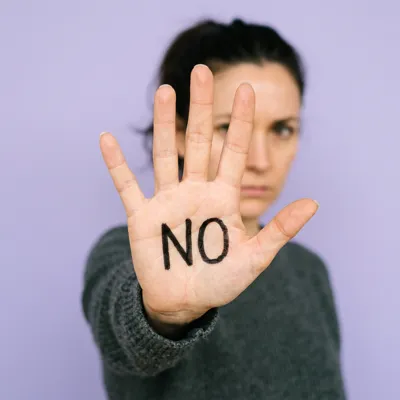
You lie awake thinking, "I should want this, so why do I feel nothing?" This drop in desire isn't something you invented. Around 40% of midlife women report low desire, and it often starts to fade during perimenopause, before your periods stop [2][1]. It's not a weakness, and it's not a sign your relationship is failing.
Desire drops from perimenopause, not just after
Your desire can change well before your final period. Perimenopause is the long transition when hormones swing up and down, sometimes for years, while you're still having periods. Menopause itself is just a marker: twelve months with no period.
The large SWAN study, which followed thousands of women, found that desire declines clearly from perimenopause onward, before menopause is confirmed [1]. So if you sensed something shift around 45 or 47, your experience matches the biology.
Low desire affects around 40% of midlife women [2]. You're not the exception. You're the rule.
Here's the key point that lifts the guilt: wanting less isn't a disease to fix. It only becomes a "disorder" if it genuinely distresses you [2]. If it doesn't bother you, there's nothing to repair.
Sources (2)
- [1] Avis NE, Brockwell S, Randolph JF, Shen S, Cain VS, Ory M, Greendale GA. Longitudinal changes in sexual functioning as women transition through menopause: results from the Study of Women's Health Across the Nation (SWAN). Menopause. 2009;16(3):442-452.
- [2] Worsley R, Bell RJ, Gartoulla P, Davis SR. Prevalence and Predictors of Low Sexual Desire, Sexually Related Personal Distress, and Hypoactive Sexual Desire Dysfunction in a Community-Based Sample of Midlife Women. J Sex Med. 2017;14(5):675-686.
Wanting less sex doesn't mean loving less
"It's your age" may have been thrown at you like a door slammed shut. The worst conclusion would be that the problem is "in your head", so it's your fault, so it means you no longer love your partner.
Desire and attachment don't run on the same wiring. You can love someone deeply, find them attractive, and feel no physical spark. In the SWAN study, even when desire drops, relationship satisfaction often stays intact [1].
What's real, though, are the physical causes: falling estrogen and androgens, dryness, pain, poor sleep, fatigue [3]. Female desire is like a dashboard with several warning lights (hormones, pain, sleep, mood, mental load, relationship), not a simple on/off switch.
When desire fades, it's usually because several lights turned red at once. Before you blame yourself, let's check them one by one.
Sources (2)
- [1] Avis NE, Brockwell S, Randolph JF, Shen S, Cain VS, Ory M, Greendale GA. Longitudinal changes in sexual functioning as women transition through menopause: results from the Study of Women's Health Across the Nation (SWAN). Menopause. 2009;16(3):442-452.
- [3] Nappi RE, Cucinella L, Martella S, Rossi M, Tiranini L, Martini E. Female sexual dysfunction (FSD): Prevalence and impact of menopause. Maturitas. 2016;94:87-91.
The real culprit is often hidden: pain, dryness, sleep
Very often, desire doesn't vanish: a physical obstacle gets in the way, and your brain shuts down desire to protect you.
As estrogen falls in perimenopause, the vaginal tissues become thinner and drier, and sex can turn uncomfortable, even painful. This is genitourinary syndrome of menopause (dryness and fragile intimate tissues), which affects 50 to 70% of postmenopausal women [4].
The mechanism is relentless: once sex hurts once or twice, your brain learns to anticipate the pain and dims desire in advance. That's not lost love, it's physiology, and it can be treated.
The culprit can also be sleep. Night sweats break up your nights, fatigue builds, mood sinks [3]. Depression, anxiety and sleep problems are among the strongest predictors of low desire [3]. An exhausted body has no bandwidth for wanting.
If lasting sadness or anxiety sets in, talk to a healthcare professional.
Sources (2)
- [4] Portman DJ, Gass MLS, et al. Genitourinary syndrome of menopause: NAMS/ISSWSH terminology consensus. Menopause. 2014;21(10):1063-1068.
- [3] Nappi RE, Cucinella L, Martella S, Rossi M, Tiranini L, Martini E. Female sexual dysfunction (FSD): Prevalence and impact of menopause. Maturitas. 2016;94:87-91.
What actually helps, and the truth about testosterone
Here's what genuinely works, and why each option acts. Understanding the mechanism helps you choose with your doctor.
- Vaginal estrogen (pessaries, creams, ring): it rebuilds moisture and reduces pain, with very little absorbed into the blood, often possible even when systemic hormones aren't advised [5].
- Moisturizers and lubricants: hormone-free, they genuinely reduce discomfort, a simple and effective first option [5].
- MHT (menopause hormone therapy): first-line for hot flashes, with the transdermal route (patch, gel) often preferred [9]; by restoring sleep, it clears the ground desire needs [5].
- Sex therapy and CBT (cognitive behavioural therapy): when fatigue, self-image or the relationship weigh heavy, they help you find room for desire again [8].
Testosterone deserves the full truth. Women make it too. In postmenopausal women with a desire disorder that truly distresses them, a physiological dose, often transdermal, improves desire, arousal and pleasure [6][7]. That's its only proven use: no anti-aging effect has been shown [6]. In France it has no approval for women, so it's prescribed off-label, by a specialist, with monitoring. Never self-prescribed.
And desire doesn't have to fade: some women find it steady or even stronger after menopause, freed from contraception and the fear of pregnancy [8].
Sources (5)
- [5] The North American Menopause Society (NAMS). The 2020 Genitourinary Syndrome of Menopause Position Statement of NAMS. Menopause. 2020;27(9):976-992.
- [9] National Institute for Health and Care Excellence (NICE). Menopause: identification and management. NICE guideline NG23. Updated 2026.
- [8] Thomas HN, Hamm M, Hess R, Thurston RC. Changes in sexual function among midlife women. J Sex Med. 2018;15(5):643-652.
- [6] Davis SR, Baber R, Panay N, Bitzer J, Perez SC, Islam RM, et al. Global Consensus Position Statement on the Use of Testosterone Therapy for Women. J Clin Endocrinol Metab. 2019;104(10):4660-4666.
- [7] Islam RM, Bell RJ, Green S, Page MJ, Davis SR. Safety and efficacy of testosterone for women: a systematic review and meta-analysis of randomised controlled trial data. Lancet Diabetes Endocrinol. 2019;7(10):754-766.
Your libido isn't a switch that burned out. It's a dashboard: sleep, pain, hormones, mood, mental load, relationship. You can check them one at a time, at your own pace. For two or three weeks, note what drains your desire most, then bring those observations to a doctor or midwife. You have the right to be taken seriously, without being brushed off with "it's just your age".
This article is for information only and does not replace the advice of a health professional. If a symptom worries you, talk to a doctor.